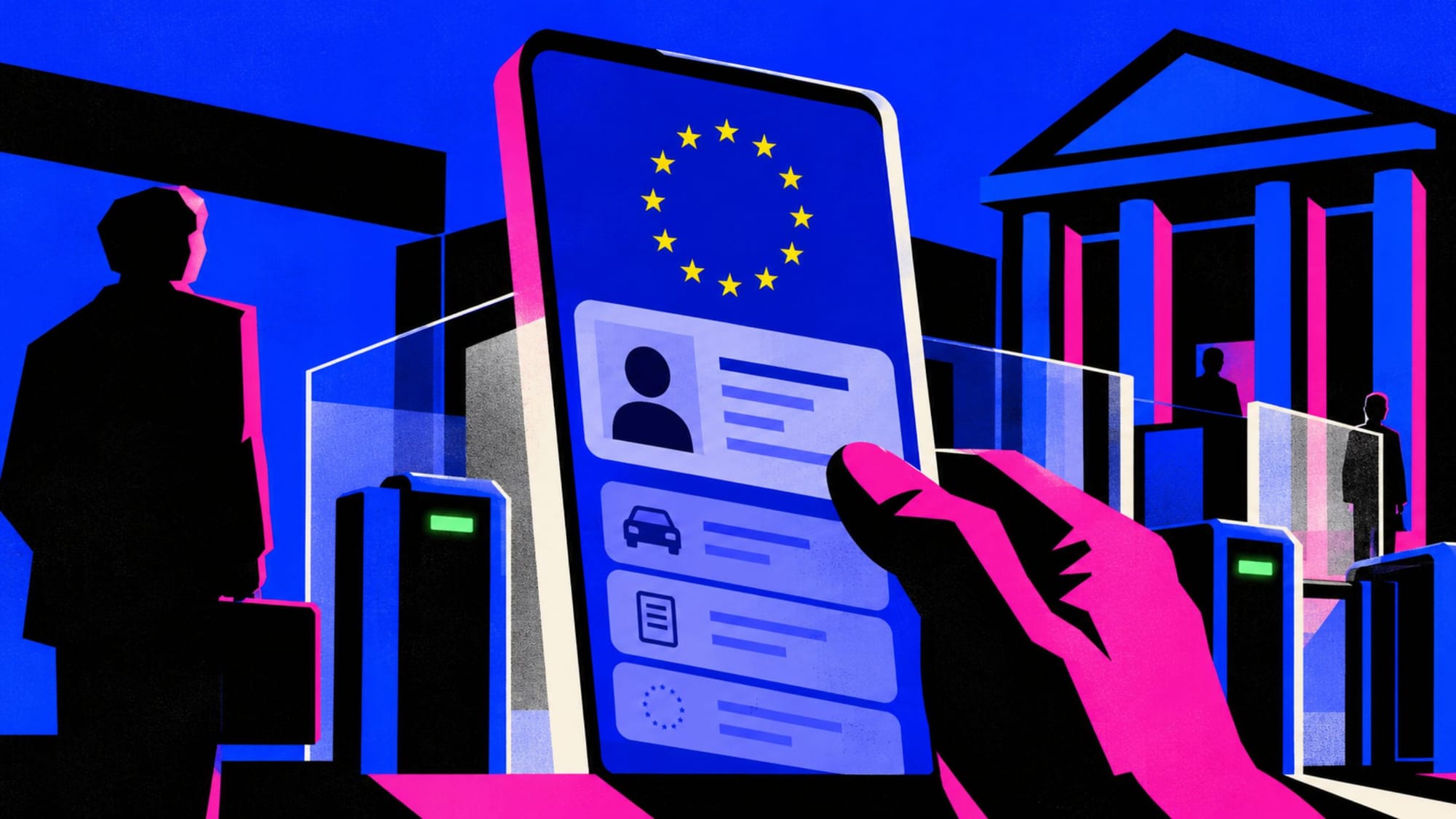
The EU’s anti-money laundering authority wants electronic ID, including the bloc’s European Digital Identity (EUDI) wallet, to become the standard way people prove their identity to banks.
Remote alternatives such as video and selfie checks will still be allowed, but only as an exception that the bank will have to justify to its supervisor.
The EUDI wallet was sold to EU citizens as a voluntary, convenient, and secure way to store their ID, driver’s license, and other documents, and to use it for accessing public and private services online and in person.
The EU’s Authority for Anti-Money Laundering and Countering the Financing of Terrorism (AMLA) has submitted its final draft standards for customer due diligence to the European Commission (EC).
AMLA is pushing for the EUDI wallet to be the go-to choice here, saying that electronic identification means, including the wallet, “should be used wherever possible.”
The standard refers to the wallet as “European Digital Identity Wallets” and says that it is one of the electronic identification means that provides “substantial” or “high” assurance levels, and should therefore be used wherever possible.
The draft standard covers customer due diligence, including “the information companies and professionals must collect and verify,” as well as “non-face-to-face verification, electronic identification, and screening of politically exposed persons.”
If a customer can neither present an ID document in person nor use electronic ID, banks can allow remote verification by video or selfie checks, but this will be considered an exception that the bank must justify to its supervisor.
This is stated in article 7 of the draft, which says that firms using these alternative tools for customer verification “shall be able to justify why the customer could not be verified” through the standard methods “and demonstrate to their supervisor that the alternative solutions used comply with the requirements of this Article.”
The draft also says that these alternative solutions must keep records, including “images, videos, sound and data” that can be used in “ex post verifications.”
All this is likely to mean that banks will look for ways to steer their customers towards using the EUDI wallet, given that using alternatives means more work and potential liability for them.
For one thing, the standard says that if a customer uses the EUDI wallet, “no additional data points need to be obtained and verified through additional information, as the reassurance provided by the means specified in said Article is deemed sufficient.”
AMLA’s proposal was met with criticism during the consultation period, with some concerned that it could be read as making eIDAS and the EUDI wallet the default option.
AMLA’s answer was to make it explicit. Its revised wording, the report says, “makes clear that the measures in Article 22(6) AMLR are still the default option with alternative verification methods only to be used when neither of the two means required by AMLR can be used.”
AMLA also noted that firms “may continue using existing remote onboarding tools that meet those requirements.” This means that a post that has been making the rounds on X, claiming that “Video, selfie + identity document, or private alternatives are no longer accepted” is not entirely true. They will still be accepted – but as exceptions.
The standards are not yet law, and the regulation they are part of will not be enforced until July 10, 2027.
AMLA’s move is yet another example of how the EU’s digital ID framework is being expanded and made more comprehensive, piece by piece. In April, the European Commission denied that the digital ID wallet was mandatory – but at the same time, Germany’s SPD proposed making it compulsory for everyone over 16 to use it to access social media.
In July, Ireland rolled out its digital wallet, built on the country’s MyGovID – because the eIDAS 2 regulation requires member states to have at least one EU Digital Identity Wallet up and running by the end of 2026.
The EU’s digital identity law, Regulation 2024/1183, says: “The use of European Digital Identity Wallets shall be voluntary.” It also says access to services “shall not in any way be restricted or made disadvantageous to natural or legal persons that do not use European Digital Identity Wallets.” And: “It shall remain possible to access public and private services by other existing identification and authentication means.”
However, given that a bank account is a necessity, and that the EUDI wallet is being pushed as the preferred method of identification in the financial sector, it is unlikely that citizens will have much of a choice.
The wallet is voluntary. In practice, it is becoming increasingly mandatory.