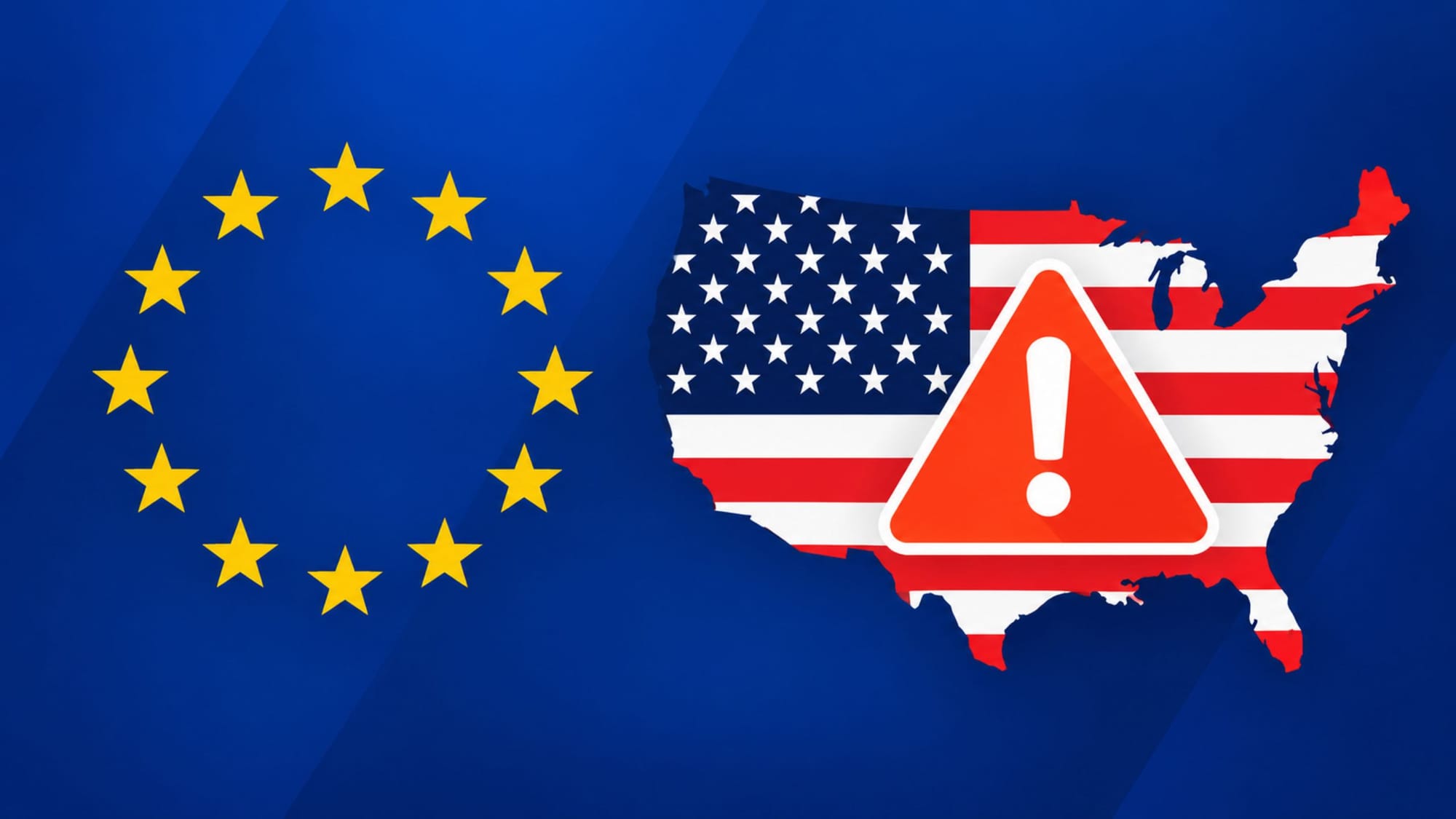
EU DisinfoLab is a Brussels-based non-profit that received a substantial amount of money from the EU – and has now put the United States on its list of foreign information threats.
The organization held its annual conference, #Disinfo2026, on October 7 and 8 in Lithuania, and the first day included a panel titled, “USA as a FIMI threat: acknowledge, adapt, push back.” FIMI stands for foreign information manipulation and interference.
“This session addresses one of the most uncomfortable questions in the counter-disinformation field today: how did the United States become a FIMI threat for Europe?” read the event’s program. It promised to explore “how the counter-disinformation community rebuilds resilience without Washington.”
Speakers included Emerson Brooking of the Atlantic Council’s Digital Forensic Research Lab (DFRLab), and a former CIA officer who writes as Alex Finley.
The next day, an Arctic session promised “growing evidence that the United States has, in specific Arctic contexts, operated as a FIMI actor.”
Another panel on October 7, “Under attack: How the counter-disinformation community is dealing with US government pressure,” referred to the US travel bans imposed on five anti-disinformation figures in December 2025.
“The use of legal intimidation to wage personal attacks raises its own free-speech concerns,” the panel’s description said, adding that the US government was waging “an unprecedented escalation in defense of US corporations seeking to avoid regulation and criticism.”
The event’s sponsors – the EU’s diplomatic service, Global Affairs Canada, and Lithuania’s foreign ministry – at first had their logos on the conference website, but just days before the event, they were removed.
The Guardian reported that printed materials had the logos covered with white stickers, and that the US had thanked Lithuania for “taking US concerns seriously.”
Lithuania’s foreign ministry said it withdrew its support because “several parts of the conference programme differ from the official position of the Government.” An EU spokesperson said the European External Action Service (EEAS) had done the same because “the organisers chose to frame some of the discussions in a way which does not align with the official positions held by the EU.”
The Guardian, however, reported: “Despite withdrawing its branding as an official supporter, the EU continues to fund the conference.”
The US State Department, meanwhile, reacted by saying that labeling the US as a “FIMI threat” – a term used to describe the influence operations of adversaries – “undermines shared goals and should alarm those involved.”
In the past, the EU has given EU DisinfoLab about €1.1 million in research grants, including €212,500 from ATHENA, a Horizon Europe project that “contributes to Europe’s defence against foreign information manipulation and interference (FIMI).”
The event’s participants and speakers are no strangers to trying to suppress speech and flag people and organizations as “threats” – and then press for action to be taken against them.
For example, in 2021, a DFRLab analyst flagged 40,000 accounts to Twitter as suspected BJP operatives; Twitter’s Yoel Roth found that “virtually all” of these accounts appeared to be real people.
In July, a US judge froze the visa ban policy. Meanwhile, one of the groups affected, HateAid, is pursuing legal action against speech it calls “digital violence.” Another, Melford’s Global Disinformation Index (GDI), is best known for building blacklists of websites for advertisers.
It’s hard to sympathize with people who have been doing the same to others for years, now complaining that they are experiencing a “chilling effect” simply because they are on the receiving end of the same tactics.
This is not about free speech, or about “disinformation.” It’s about people and organizations who have been on the “disinformation” gravy train for years now looking for new ways to keep that lucrative train running.