Newly disclosed internal records, obtained by the US House Judiciary Committee, reveal that Brussels privately warned X that it could be blocked from operating in the European Union unless it obeyed a set of Digital Services Act demands.
We obtained a copy of the records for you here.
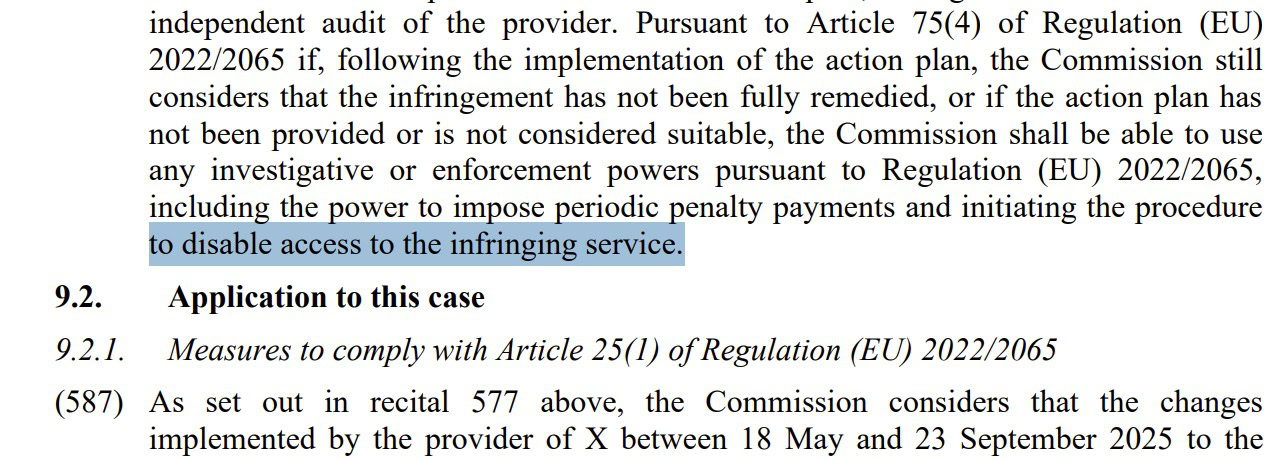
The decision, stretching across 184 pages, became the foundation for a fine of nearly $150 million. Buried in the text is a clear threat: if X failed to comply, the Commission could “disable access to the infringing service.” That phrase, lifted straight from Article 75(3) of the DSA, turns regulatory oversight into a power switch.
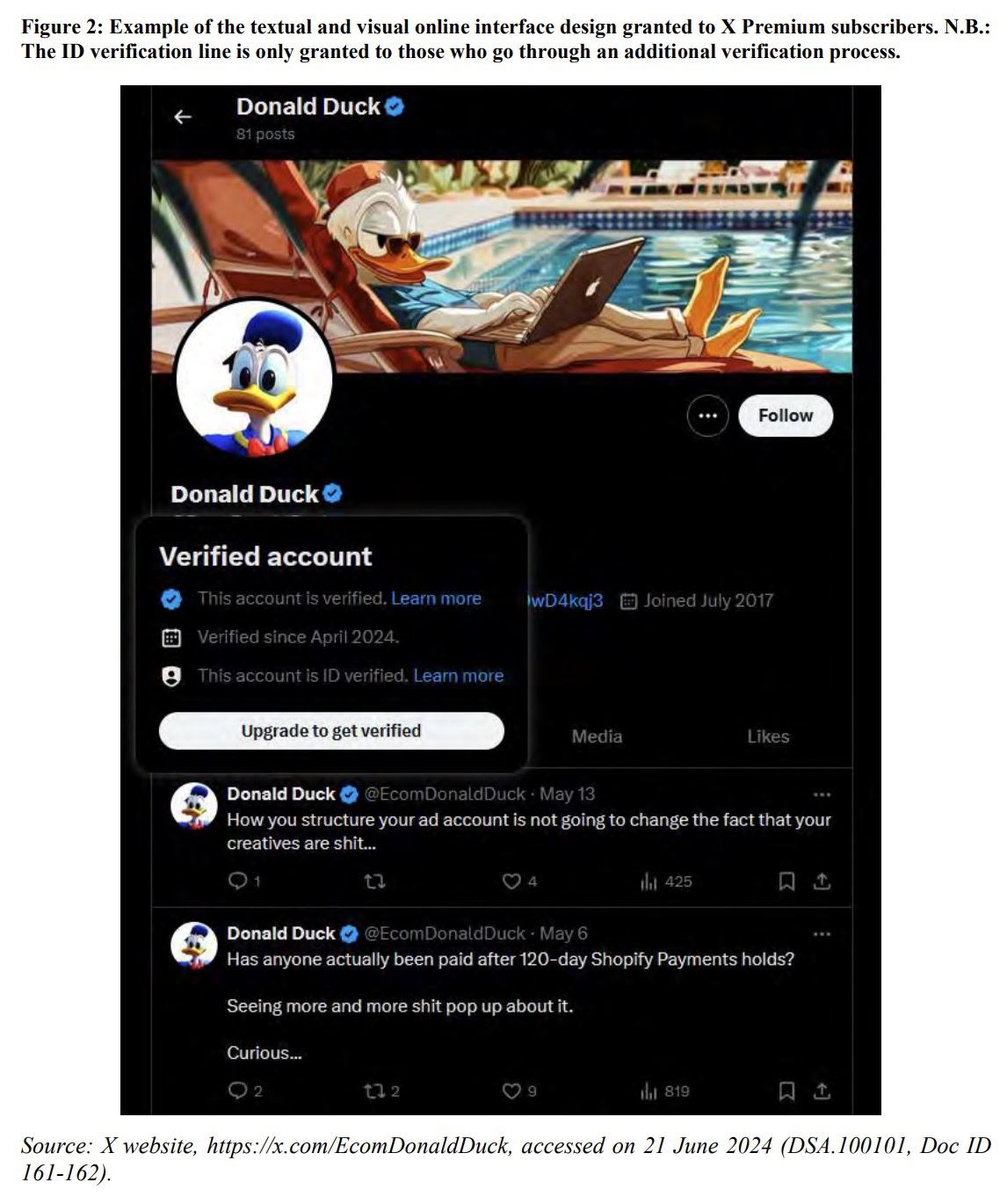
The fines themselves read like parodies of seriousness. €45 million for “misappropriating” the blue checkmark. Somehow, allowing people to pay to show they’re a real person and get a checkmark supposedly distorted “cross-industry visual standards.”
€35 million for an ad repository deemed too limited. €40 million for withholding data from “qualified researchers,” some based outside the EU. We all know what type of “researcher” that is.
Even the supporting evidence borders on comic. One example cited a parody of a Donald Duck account. Regulators claimed the cartoon’s blue checkmark could “mislead users” into believing the fictional duck was real. In Brussels, satire is treated as a compliance issue.
The Commission’s orders go beyond Europe’s borders, demanding that X give global researchers access to platform data, including material related to US politics.
The House Judiciary Committee called this an overreach into American sovereignty. For Brussels, it is just another box to tick under “responsible governance.”
Officials compared X’s operations to other platforms and faulted it for “operating differently.” That phrase captures the real offense: refusing to follow a standardized moderation model shaped by bureaucratic preference.
The documents outline a strategy of control built on process and penalties. The Commission presents itself as an impartial referee, yet wields the threat of erasure to enforce conformity.