Lawmakers in New South Wales wrapped up the year by rushing through security legislation that broadens police powers and imposes new limits on protest activity and expression.
Passed in an extraordinary sitting of Parliament just before Christmas, the Terrorism and Other Legislation Amendment Bill 2025 represents one of the most far-reaching state security expansions in recent years.
Under the new law, the display of a symbol belonging to a “prohibited terrorist organization” can now lead to a prison term of up to two years.
Police officers are also granted authority to order individuals to remove face coverings if they are attending a demonstration or public event and the officer “reasonably suspects” they may commit an offense.
The legislation also permits police to halt public gatherings in the aftermath of a terrorist attack.
More: Victoria Moves to Force Online Platforms to ID Users and Expand State Powers to Curb “Hate Speech”
Although the bill is not framed as a censorship measure, it introduces powers that could intersect with the expanding use of surveillance technologies.
By compelling people to show their faces during political demonstrations, the law effectively weakens the ability of citizens to shield themselves from biometric tracking at a time when facial recognition systems are increasingly used by both law enforcement and private entities.
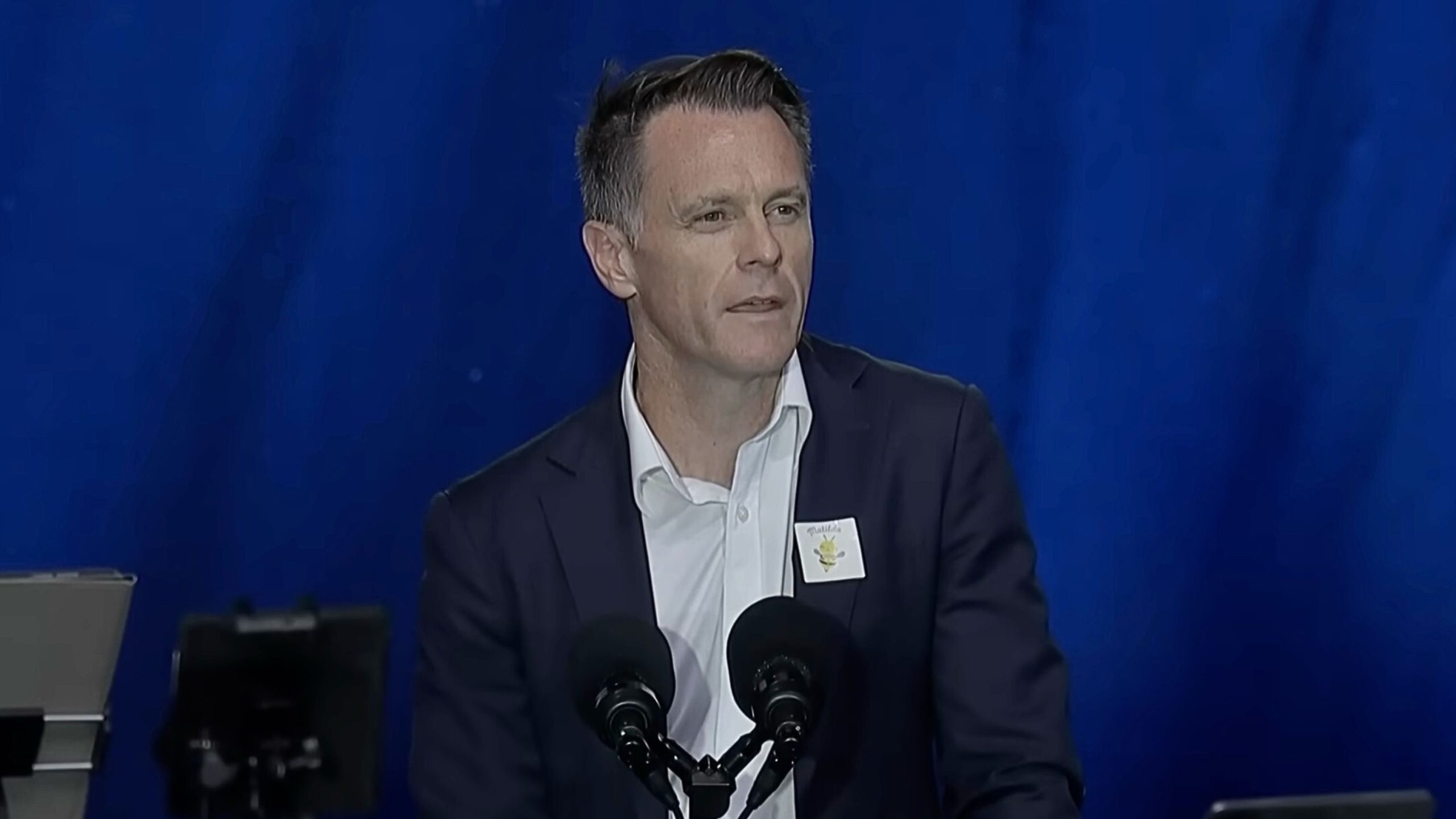
Premier Chris Minns has openly acknowledged that the law curtails individual freedoms. “These are extraordinary measures, I acknowledge that. I know that not all Australians that live in NSW support these changes, but we have decided it’s the best way of ensuring we do everything possible to keep the people of NSW safe,” he said following the bill’s passage.
Minns further conceded that the process was accelerated, crediting bipartisan cooperation for allowing the legislation to pass so quickly. “I know that that happened in a short space of time. I know that the negotiations and the talks had to happen over a short space of time, but we appreciate the goodwill in which we were able to get much-needed reform in New South Wales through the Parliament,” he stated.
He justified the timing by saying, “We couldn’t wait, this was urgent.”
When pressed about why the measures were bundled into a single omnibus bill, Minns admitted that time was the deciding factor. “If it had been cut up into its component parts, we would have been here way past Christmas…maybe people who oppose elements of those changes would have loved that, because it would have meant that the passage of the bills would have been stalled.”
The Premier did not shy away from admitting that rights were being limited in the process. “I accept, I guess, the implicit criticism that this does restrict rights, whether it’s for protests or guns,” he said. “But in these circumstances, we’ve got a higher obligation to the public… our number one obligation is to keep the public safe.”
Minns also signaled that more legislation is on the horizon, confirming that the government intends to introduce new “hate speech” laws in the coming months. “I want to make it clear that this isn’t the end of change…we’re currently looking at other areas of the law that are urgently required to confront hate speech, confront Islamist terrorism in our community,” he said. “Hate speech leads to hateful actions…and we’re prepared to take action and steps to keep the community safe.”
While the Premier frames the agenda as necessary to safeguard citizens, the process reflects a deeper shift toward governance by emergency.
Parliament’s decision to fast-track legal powers during a holiday recess, without full debate or public review, raises serious questions about transparency and proportionality.
The rapid normalization of police discretion over identity and assembly carries lasting implications for privacy and dissent.
As soon as governments assert the right to define and control “hate speech” or to compel identification at protests, the boundaries of lawful expression narrow quickly. A response to terrorism may end up reshaping the basic relationship between the individual and the state.