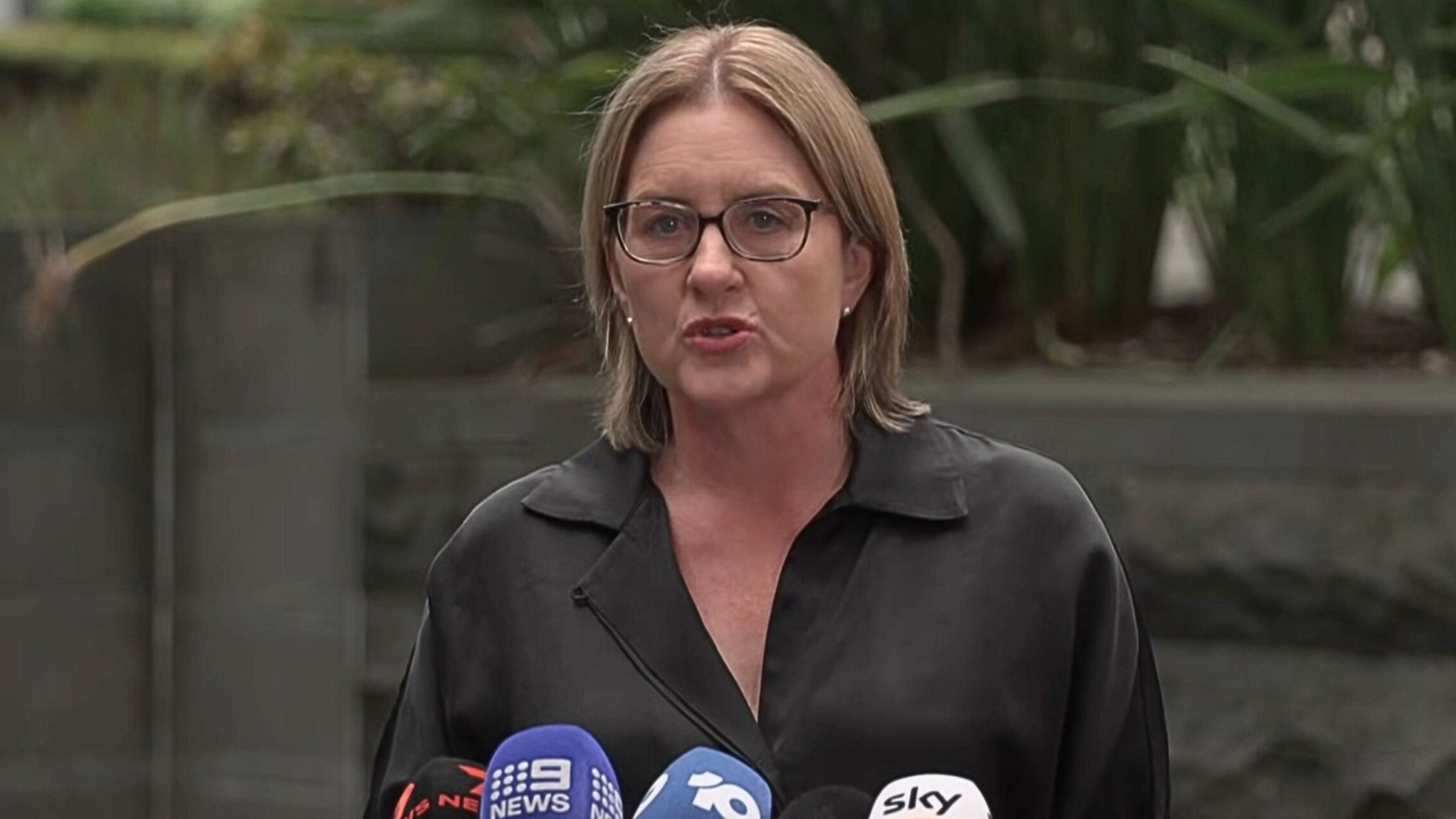
Victoria is preparing to introduce some of the most far-reaching online censorship and surveillance powers ever proposed in an Australian state, following the Bondi Beach terror attack.
Premier Jacinta Allan’s new five-point plan, presented as a response to antisemitism, includes measures that would compel social media platforms to identify users accused of “hate speech” and make companies legally liable if they cannot.
Presented as a defense against hate, the plan’s mechanisms cut directly into long-standing principles of privacy and freedom of expression. It positions anonymity online as a form of protection for “cowards,” creating a precedent for government-mandated identity disclosure that could chill lawful speech and dissent.
During her announcement, Premier Allan said:
“That’s why Victoria will spearhead new laws to hold social media companies and their anonymous users to account – and we’ll commission a respected jurist to unlock the legislative path forward.”
Under the proposal, if a user accused of “vilification” cannot be identified, the platform itself could be held responsible for damages. This effectively converts private platforms into instruments of state enforcement, obligating them to expose user data or face financial risk.
The Premier also announced plans to accelerate the introduction of the Justice Legislation Amendment (Anti-vilification and Social Cohesion) Act 2024, which had been due to take effect in mid-2026. It will now be brought forward to April 2026.
The law allows individuals to sue others for public conduct, including online speech, that a “reasonable person” might find “hateful, contemptuous, reviling or severely ridiculing” toward someone with a protected attribute. These protected categories include religion, race, sex, gender identity, sexual orientation, and disability, among others.
This framework gives the state and private citizens broad interpretive power to determine what speech is “hateful.” As many civil liberties experts note, such wording opens the door to legal action based on subjective offense rather than clear, objective harm.
More: Chris Minns Defends NSW “Hate Speech” Laws Linking Censorship to Terror Prevention
Weakening Oversight of Speech Prosecutions
Premier Allan also intends to remove a major procedural safeguard from Victoria’s criminal vilification laws: the requirement that the Director of Public Prosecutions (DPP) consent to police prosecutions. Without that check, police could independently pursue speech-based offenses, bypassing higher legal oversight.
This change would hand significant discretion to law enforcement in determining which speech crosses into criminality. Once enacted, it would mean that a person’s online comments could be prosecuted directly, without review from the state’s top legal office.
The “anti-hate” package extends beyond censorship. It proposes new powers for police to shut down protests in the aftermath of “designated terrorist events” and establishes a Commissioner for Preventing and Countering Violent Political Extremism to coordinate programs across schools, clubs, and religious institutions.
These measures, combined with the online anonymity restrictions, represent a substantial consolidation of state power over communication, movement, and association, all justified in the name of combating hate and maintaining safety.
Requiring companies to unmask users fundamentally undermines the principle of anonymous participation, a cornerstone of free expression, whistleblowing, and political organizing. Anonymity has historically protected vulnerable groups, dissidents, and small voices from retaliation.
Under Victoria’s proposal, those protections could erode rapidly as platforms are pressured to reveal identities or face litigation.
Laws targeting “hate speech” often extend far beyond their original purpose, evolving into broad speech controls that deter public criticism, satire, and unpopular opinions. Once enacted, such powers rarely contract.