Oklahoma became the latest state to sue Roblox last week, filing a 51-page complaint accusing the platform of endangering children and deceiving parents.
Attorney General Gentner Drummond said Roblox “marketed itself as a safe place for children but turned a blind eye as predators targeted and exploited minors on its platform.”
We obtained a copy of the complaint for you here.
The lawsuit identifies the absence of age and identity verification at account creation as a “design feature that leads to child endangerment” and dismisses the facial age estimation Roblox introduced in November 2025 as “far too little, and far too late.”
Oklahoma is at least the tenth state to sue. The complaint follows lawsuits from Texas, Kentucky, Louisiana, Iowa, Nebraska, Tennessee, Florida, and LA County, plus settlements with Alabama, Nevada, and West Virginia totaling tens of millions of dollars.
The allegations across these cases are serious; documenting organized abuse rings, adults posing as children, and a company that employees say prioritized engagement metrics over safety.
“Roblox’s willingness to sacrifice the well-being of children in pursuit of profit is unconscionable and indefensible,” Drummond said.
But look at what every one of these lawsuits and settlements demands as the fix: more identity verification, more biometric collection, more government ID scanning.
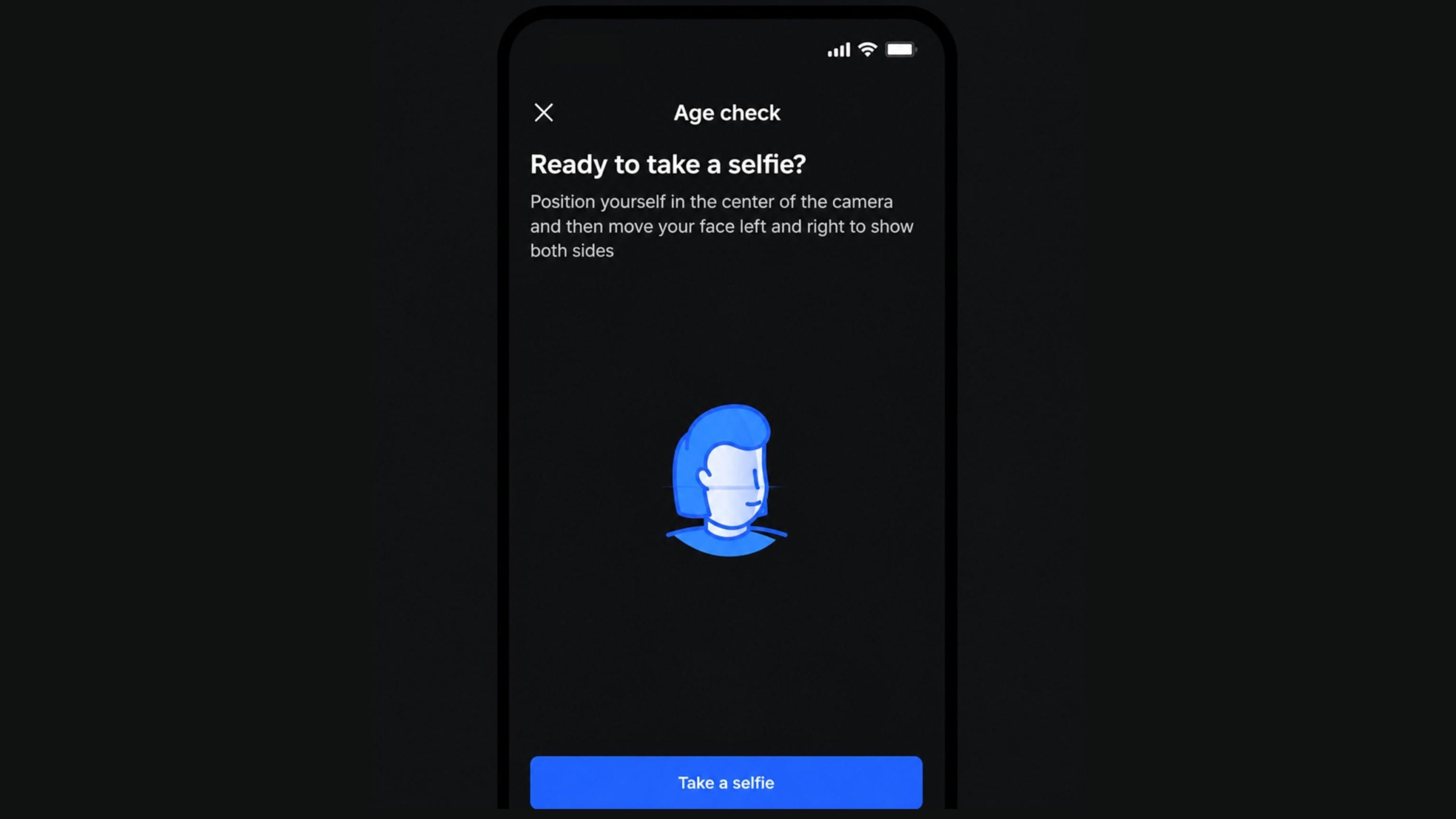
Roblox has obliged. The company now requires age verification through Persona, a third-party vendor, before users can access chat or voice features.
The options are a government ID scan or a facial age estimation via selfie video. Half of Roblox’s 150-million-plus user base had completed the process by early 2026.
In April, Roblox announced two new account tiers launching in June that lock unverified users out of most games and all communication features. You either submit biometric data or lose the platform. There is no third option.
More: From Roblox To The IRS: The Great Biometric Data Grab
Nevada’s settlement pushed even further, requiring Roblox to strip encryption from minor users’ chats. That means children’s private messages become readable by the company and available to anyone who obtains access through a subpoena, a data breach, or a policy change Roblox hasn’t written yet.
This is the pattern now. A platform fails to protect children. States sue. The legal remedy is a biometric surveillance system that harvests face scans and government IDs from tens of millions of kids, funneled through a vendor caught running an identity surveillance operation far more extensive than age estimation requires.
The children whose safety was supposedly the point end up with less privacy than they started with, their faces processed by systems they never consented to and can’t opt out of without losing access entirely.
The standard being set is one where using a children’s gaming platform requires handing over biometric data.