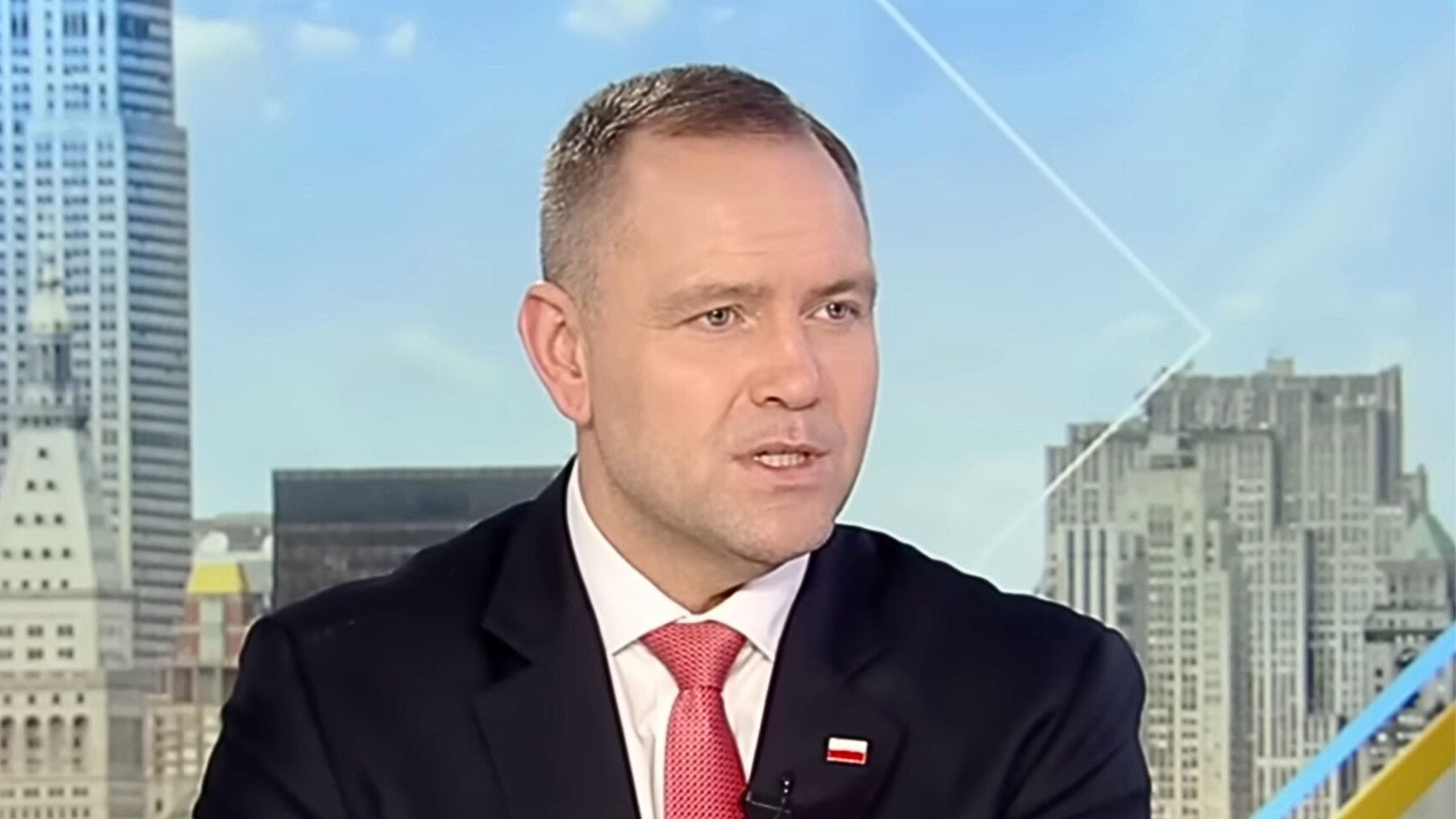
President Karol Nawrocki has blocked a government proposal meant to enforce the European Union’s censorship law, the Digital Services Act (DSA), in Poland, arguing that it would turn state regulators into online censors.
His decision halts one of Warsaw’s most significant attempts to bring national law in line with EU digital rules.
“As president, I cannot sign a bill that effectively amounts to administrative censorship,” Nawrocki stated. “A situation in which a government official decides what is permitted on the Internet is reminiscent of the Ministry of Truth in Orwell’s 1984.”
The bill, approved by parliament in November, was presented as a way to protect users from online abuse and falsehoods.
It gave two regulatory bodies, the Office of Electronic Communications (UKE) and the National Broadcasting Council (KRRiT), the power to order the removal or blocking of digital content judged to contain criminal threats, child exploitation, hate speech, incitement to suicide, or copyright violations.
The plan also allowed complaints to originate from a wide range of sources, including the police, prosecutors, border guards, or tax authorities. Content authors would have been notified and granted a two-week window to object before any blocking took effect.
Supporters of the proposal pointed to new appeal mechanisms for users who felt wronged by platform decisions, calling the bill a step toward transparency and accountability.
Nawrocki, however, saw the measure differently.
In a detailed explanation posted on the Chancellery’s website, as reported by Notes From Poland, he wrote that the safeguards were superficial: “Instead of real judicial review, an absurd solution has been introduced: an objection to an official’s decision, which citizens must file within 14 days.” He accepted that “the internet poses many threats, especially to children,” but insisted that the government’s draft was “indefensible and simply harmful.”
“The proposed solutions create a system in which ordinary Poles will have to fight the bureaucracy to defend their right to express their opinions. This is unacceptable,” he said, adding that “the state is supposed to guarantee freedom, not restrict it.”
The government, which has often clashed with the president, condemned the veto. Digital affairs minister Krzysztof Gawkowski said Nawrocki’s action would weaken online protection efforts.
Gawkowski argued that the rejected bill would have strengthened user rights, guarded families from “hate” and “misinformation,” and countered the spread of foreign propaganda.
The Polish Media Council also voiced disappointment, warning that the veto “will hinder the fight against online disinformation, especially at a time when almost every day brings new lies from across the eastern border.”
By rejecting the bill, Poland now remains one of several EU countries yet to implement the DSA, exposing it to possible sanctions from Brussels. The European Commission referred Poland and four others to the Court of Justice of the European Union last May over non-compliance.