

Apple is now starting to demand age verification from UK iPhone users, and the latest iOS 26.4 beta makes clear what’s at stake for anyone who declines.
The move is a direct consequence of the UK’s Online Safety Act, a censorship law that has also forces platforms to check the identity/age eligibility of every adult user or face fines reaching 10% of global revenue.
The law is controversial but British Prime Minister Keir Starmer says it doesn’t go far enough.
More: The Digital ID and Online Age Verification Agenda
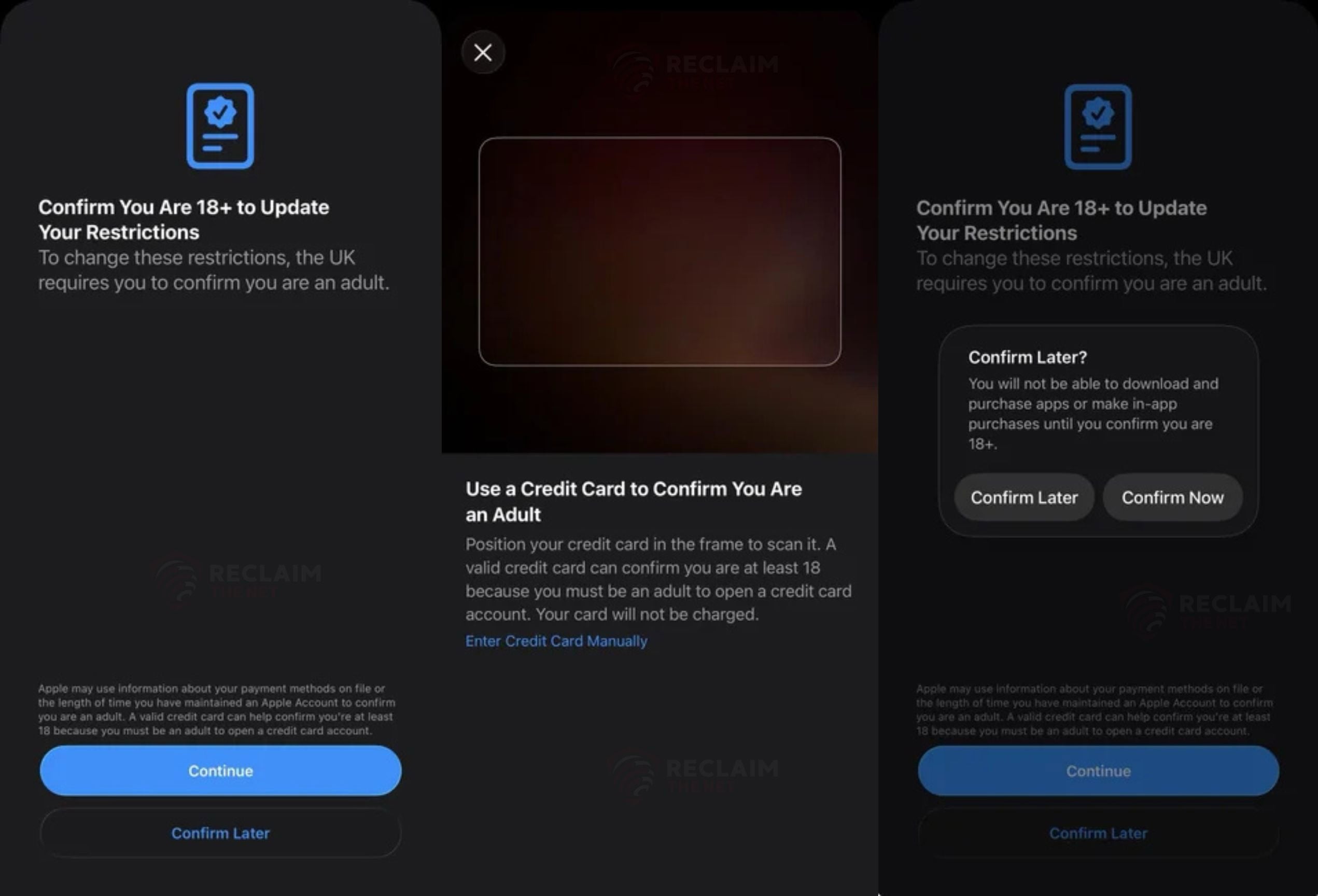
A prompt appears after installation asking users to confirm they’re over 18. Refuse, and Apple says users “will not be able to download and purchase apps or make in-app purchases.”
The verification process gives Apple several ways to build a profile of your age. It can pull from the payment method already linked to your account, use account age as a proxy, or ask you to scan a credit card. Some users may eventually be asked to scan a photo ID. Apple frames this as seamless.
More: Xbox UK Age Verification Launch Locks Out Thousands of Players
The logic Apple uses to automatically confirm your age reveals how much it already knows about you. “A valid credit card can help confirm you’re at least 18 because you must be an adult to open a credit card account,” the company states. Your financial history is now your age certificate.
The UK’s Online Safety Act is the engine behind this. The law came into force in 2025 and is one of the most consequential pieces of internet legislation in recent UK history.
The question of who actually handles verification data is its own problem. Social media companies and dating apps often outsource the age-gating process to third-party providers that collect biometric data, passport and personal identification documents, and banking and credit card information.
Those providers have uneven track records. In 2024, a major data breach left administrative credentials exposed online for over a year. In late 2025, a significant breach involving a third-party support vendor exposed approximately 70,000 government ID photos used for age verification.
The practical effect of all this is predictable. Apple’s UK rollout is part of a broader expansion announced this week. Users in Australia, Brazil, and Singapore will soon be blocked from downloading apps rated 18+ without verification, and Apple is sharing age category data with developers in Utah and Louisiana to satisfy local compliance requirements.
Each new jurisdiction adds another layer of identity infrastructure Apple is building into its platform.