The latest turn in the Florida Attorney General's case against OpenAI and its CEO Sam Altman is a request for a court to order the implementation of "a robust and effective age verification system."
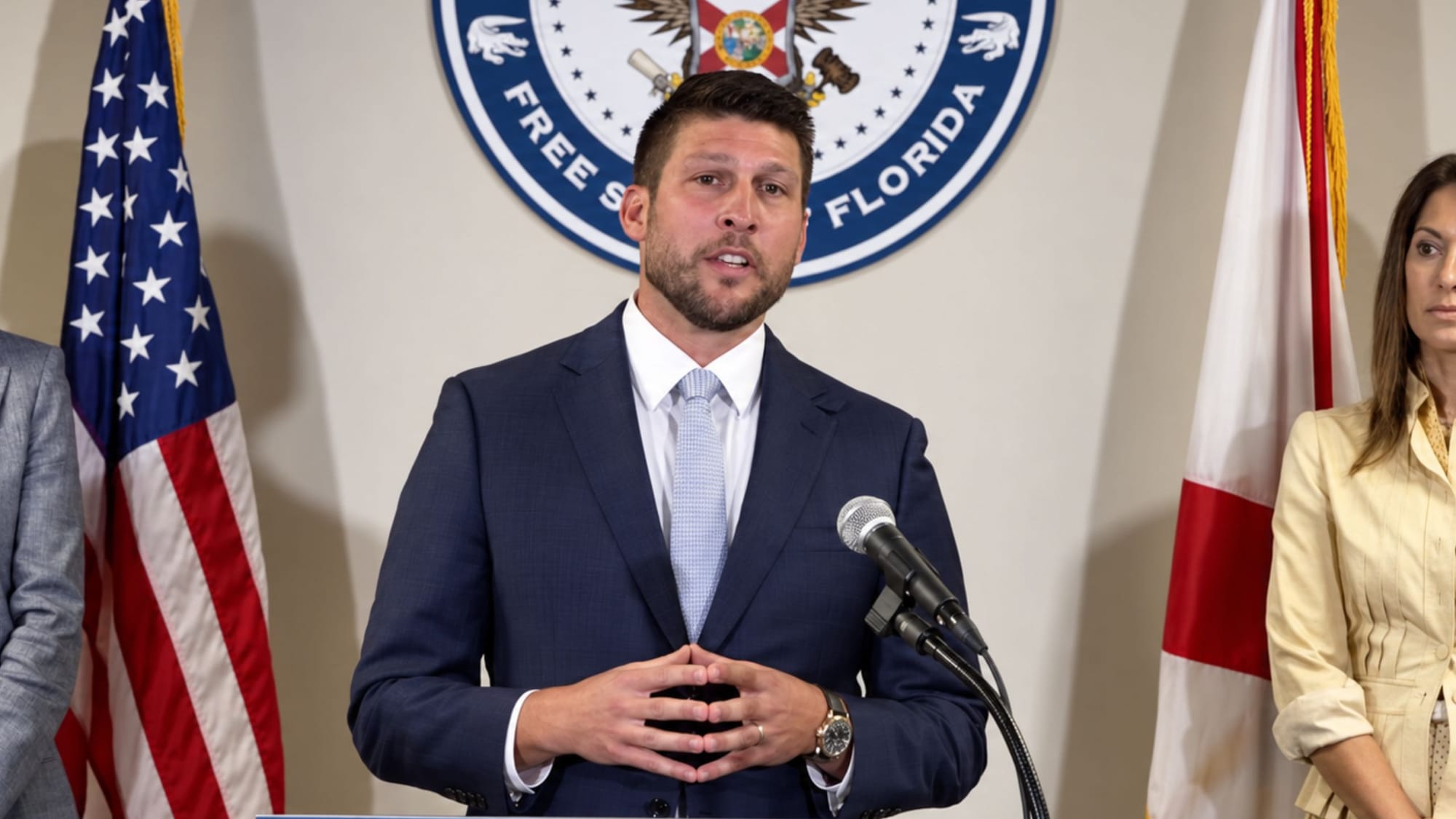
Florida Attorney General James Uthmeier on Sunday filed a motion asking a state court to impose a temporary injunction on OpenAI and its CEO Sam Altman that would cover the development and deployment of future AI models, and even the way the company is allowed to speak about its product.
The filing is a motion for a temporary injunction in a case that was first brought four months ago against OpenAI and its CEO Sam Altman.
The case was moved to a federal court, but Judge Cannon sent it back to state court, finding that OpenAI had not established the necessary grounds for federal jurisdiction.
We have been reporting about this case, and the motion to some extent sheds light on why we said at the time that it was in effect an attempt to put an ID check on every ChatGPT user. The filing now makes it clear that the state is seeking to "enjoin" OpenAI and Altman from "operating their AI platform without a robust and effective age verification system to ensure children do not continue to be exploited by their need to gather data."
OpenAI is yet to respond to the new motion, but the court is being asked to stop the company and its CEO Sam Altman from six different actions while the case is ongoing: developing new AI models without independent third-party guardrails and approval; offering ChatGPT to minors in Florida; collecting data from children under 13 without notice and verifiable parental consent; misrepresenting the safety of the software; giving it human attributes; and using tactics to prolong conversations and keep users engaged.
The Attorney General's motion leans on the Florida Digital Bill of Rights, which allows the state to enforce the federal COPPA rule that is supposed to protect the privacy of children on the internet, as well as a claim of public nuisance.
This is the only one of the six things the court is asked to forbid that is not cited as something OpenAI is currently doing, but rather, something it must start doing. And the motion makes it clear that the Attorney General believes that without a court order, the company will not do it.
The company is accused of not having an "enforceable mechanism to keep children away," and the free version of ChatGPT is said to have "no gatekeeping or age verification mechanism."
The filing goes into some detail about the harm that the Attorney General believes children are exposed to thanks to ChatGPT, and alleges that "one in five children under the age of 13 are exposed to the harms described in this motion."
These include advising teenagers on how to commit suicide, mix dangerous drugs, or become anorexic, as well as helping to plan violent acts, including a mass shooting and a multiple homicide in Florida alone.
The document also quotes OpenAI's newest board member Paul Christiano as saying, "I now believe there is a meaningful risk that rapid acceleration in AI capabilities leads to catastrophic and irreversible loss of control in the very near term," and former OpenAI researcher Jacob Coxon as saying that the company was "gambling with our lives."
But the Attorney General's solution is to put in place a system that would require every user to prove their age to the company. The filing insists that this is what OpenAI itself is asking for, as the only way it can be stopped from continuing to put profits over people.
We know that the company has not only not opposed the idea of age verification, but has in fact already implemented its own version of it, and has been developing more advanced systems that don't just check age, but track users and their behavior to guess their age. And we know that the real effect of this is not to keep children away from a product, but to build a system that can identify every user.