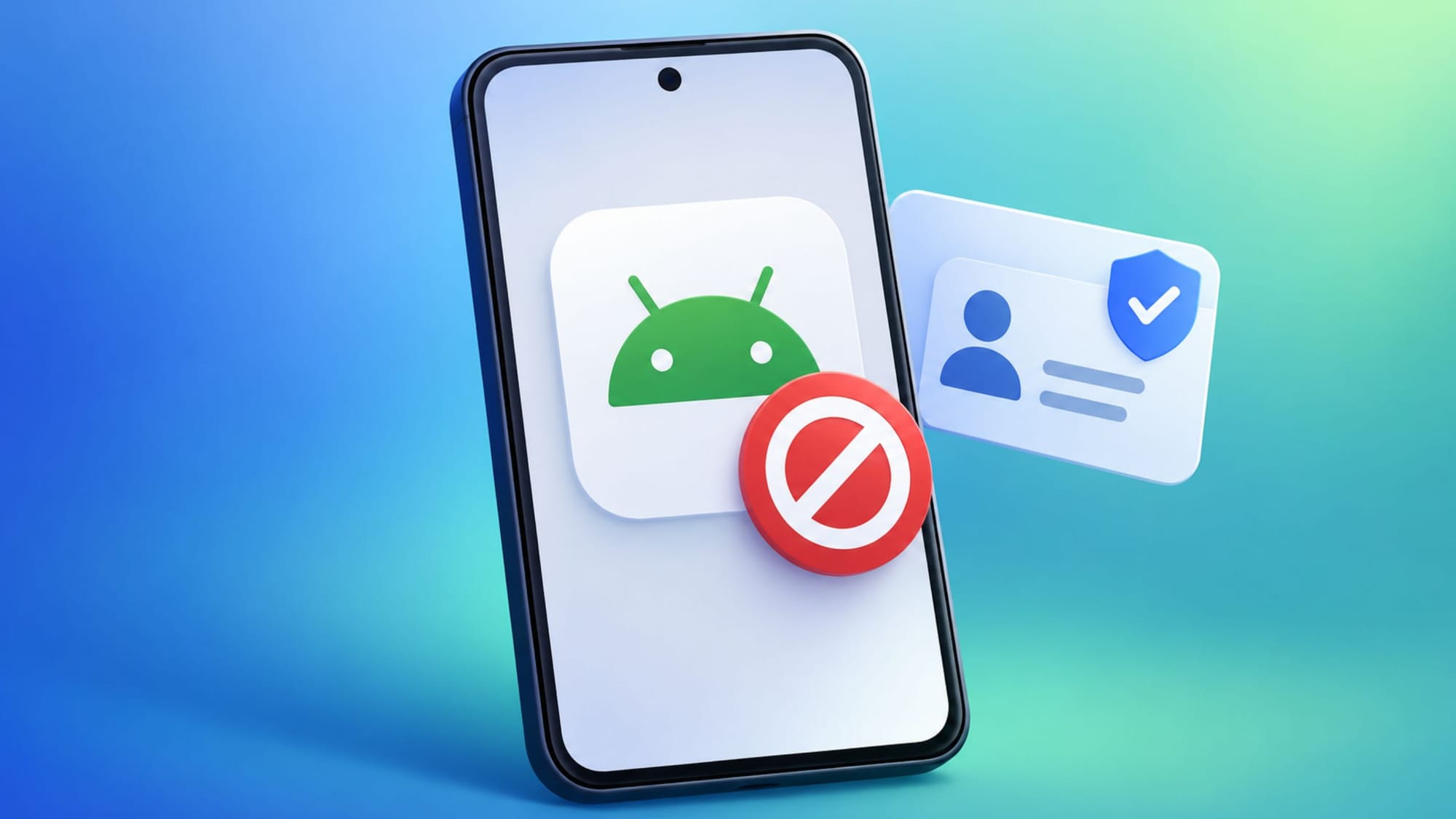
Google’s Android developer identity verification requirement, which was announced in August 2025, has come into effect.
As of that date, apps from unregistered developers are blocked on certified Android devices in Brazil, Indonesia, Singapore, and Thailand. The “protections,” as Google calls this controversial policy, will in 2027 expand to the whole world.
Google’s own documentation describes this milestone: “Protections begin for all users who install apps from participating stores in Brazil, Indonesia, Singapore, and Thailand on certified devices running Android 7+.”
The change affects not only apps distributed through Google Play, but also those installed from other stores – as long as they are running on certified Android devices, and the store is participating in the program. Currently, there are seven of those, including Google Play, Samsung’s Galaxy Store, and Xiaomi’s GetApps.
Google’s Matthew Forsythe, Director of Product Management for Android App Safety, said that the goal of the scheme is to “strengthen ecosystem security and stop malicious actors from hiding behind anonymity to release harmful apps.”
To that end, Google has been asking developers to register with the US giant by providing their government-issued ID, and other identifying information, including legal name, address, email, and phone number. This is something that has to be done even if an app is distributed entirely outside of Google Play. The registration process also carries a $25 fee.
Those who have not done this by the deadline can no longer distribute their apps on Google Play, and installs of their apps from other stores are blocked on certified Android devices in the four countries where the policy is already enforced.
There is a way for Android users in these countries to install apps from unverified developers, but it requires going through what Google calls “advanced flow,” ten steps that include enabling developer mode, clicking through multiple warning screens, and waiting 24 hours after that before the installation can proceed.
Then there’s the “hobbyist” tier, where a “limited distribution” account can be created to share apps on up to 20 devices without a government-issued ID or a fee. This is meant for “students, hobbyists, and learners,” and it is not hard to see why Google would want to leave this door ajar, since it is in its interest to have as many people as possible learning to write Android apps, and as many devices as possible running Android.
Once an app is shared with 21 or more users, the developer has to pay the $25 fee and hand over their personal data to Google.
We have covered each step of this. F-Droid, the alternative app repository, disputed Google’s assurance that “sideloading isn’t going anywhere,” calling that claim “clear, concise, and false,” and privacy groups signed an open letter objecting to the registration demand before the deadline arrived.
While Google is at this point not preventing anyone from sideloading apps, what the company is doing is making the process so cumbersome that most users will not bother.