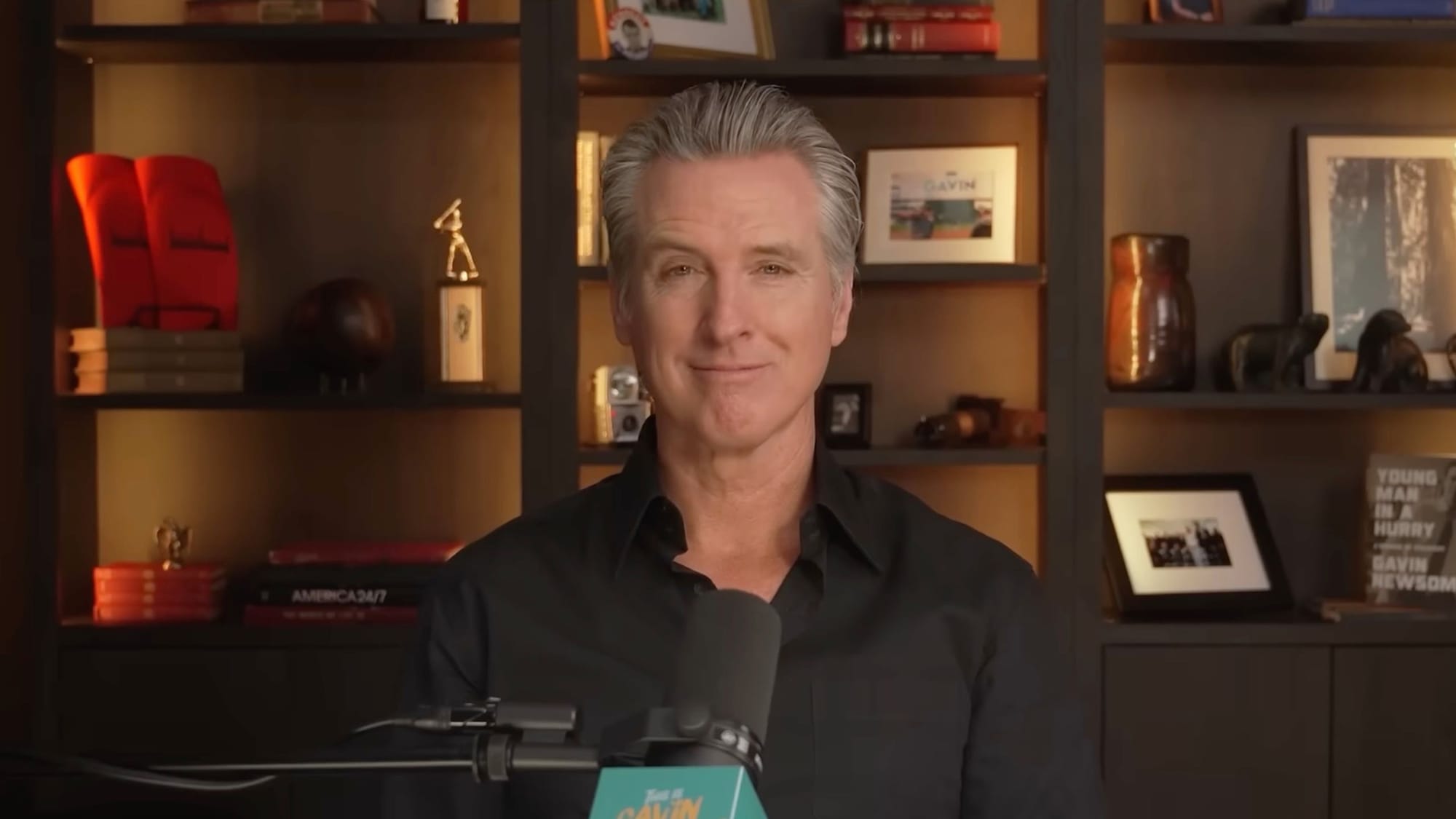
California Governor Gavin Newsom has signed into law a bill that critics say is designed to silence citizen journalists like Nick Shirley and let taxpayer-funded organizations, some of them suspected of fraud, remove documentation of their activities from the internet.
The law, which was signed on Saturday and goes into effect on October 1, 2027, is officially there to protect the privacy of employees and volunteers working in organizations serving immigrants, but the way it does it is by giving them the power to demand that their images and personal information be deleted from the internet, based on a claim of "reasonable fear."
No police report or court approval is needed for this, only the claim. There is no exemption for journalists or journalism.
The bill, which was authored by Democrat Assemblywoman Mia Bonta, was dubbed the "Stop Nick Shirley Act" by those opposing it, as it is seen as a direct attack on his work.
Shirley has been investigating and documenting alleged fraud in programs meant to help immigrants, and has had millions of views on X for his videos, including one showing empty buildings in Minnesota registered as daycares that he said were used to defraud the system of $110 million.
The new law in California will apply to all organizations providing legal representation, advocacy, case management, humanitarian relief, translation, counseling, and healthcare to immigrants. It also sets up an address confidentiality program, modeled on California's Safe at Home program.
Those who don't comply with the demands for content removal can be fined $10,000 and also face civil and criminal liability and imprisonment.
Shirley responded to the signing of the bill into law by saying that it was created only after he exposed fraud in immigrant communities, and accused Newsom and California politicians of showing their true face as "corrupt politicians" who, "when the fraud is exposed, create new laws to protect the fraudsters and penalize those who expose it."
He also said that the law makes "immigration support service providers" a protected class in California, and noted that thanks to this, if he films a hospice "with no patients that are receiving millions through Medicaid," the owner can prevent him from publishing the footage, and if he does anyway, he could get a huge fine.