
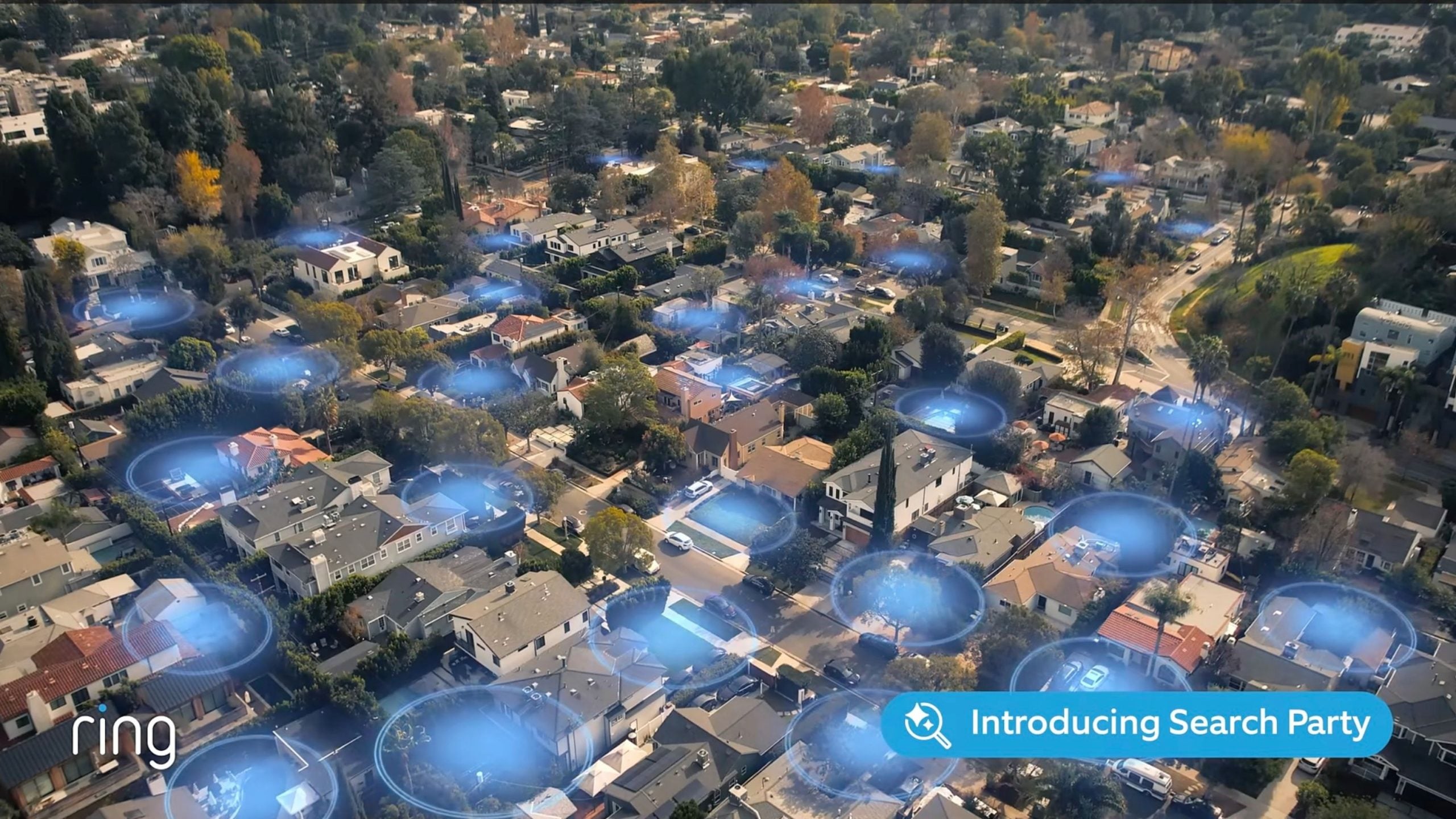
Amazon picked the Super Bowl for a reason. Nothing softens a technological land grab like a few million viewers, a calm voice, and a lost dog.
Ring’s commercial introduced “Search Party,” a feature that links doorbell cameras through AI and asks users to help find missing pets. The tone was gentle despite the scale being enormous.
Jamie Siminoff, Ring’s founder, narrated the ad over images of taped-up dog posters and surveillance footage polished to look comforting rather than clinical. “Pets are family, but every year, 10 million go missing,” he said. The answer arrived on cue. “Search Party from Ring uses AI to help families find lost dogs.”
This aired during a broadcast already stuffed with AI branding, where commercial breaks felt increasingly automated. Ring’s spot stood out because it described a system already deployed across American neighborhoods rather than a future promise.
More: How Amazon Turned Your Neighborhood Into a Police Database
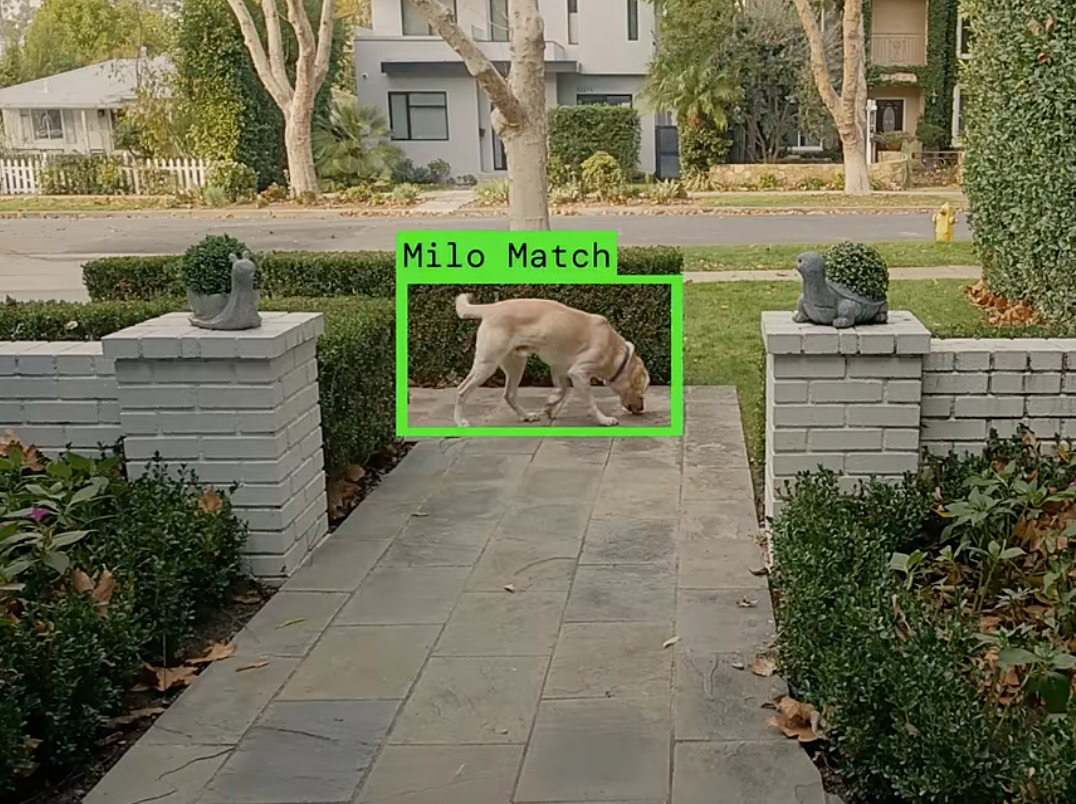
Search Party lets users post a missing dog alert through the Ring app. Participating outdoor cameras then scan their footage for dogs resembling the report. When the system flags a possible match, the camera owner receives an alert and can decide whether to share the clip.
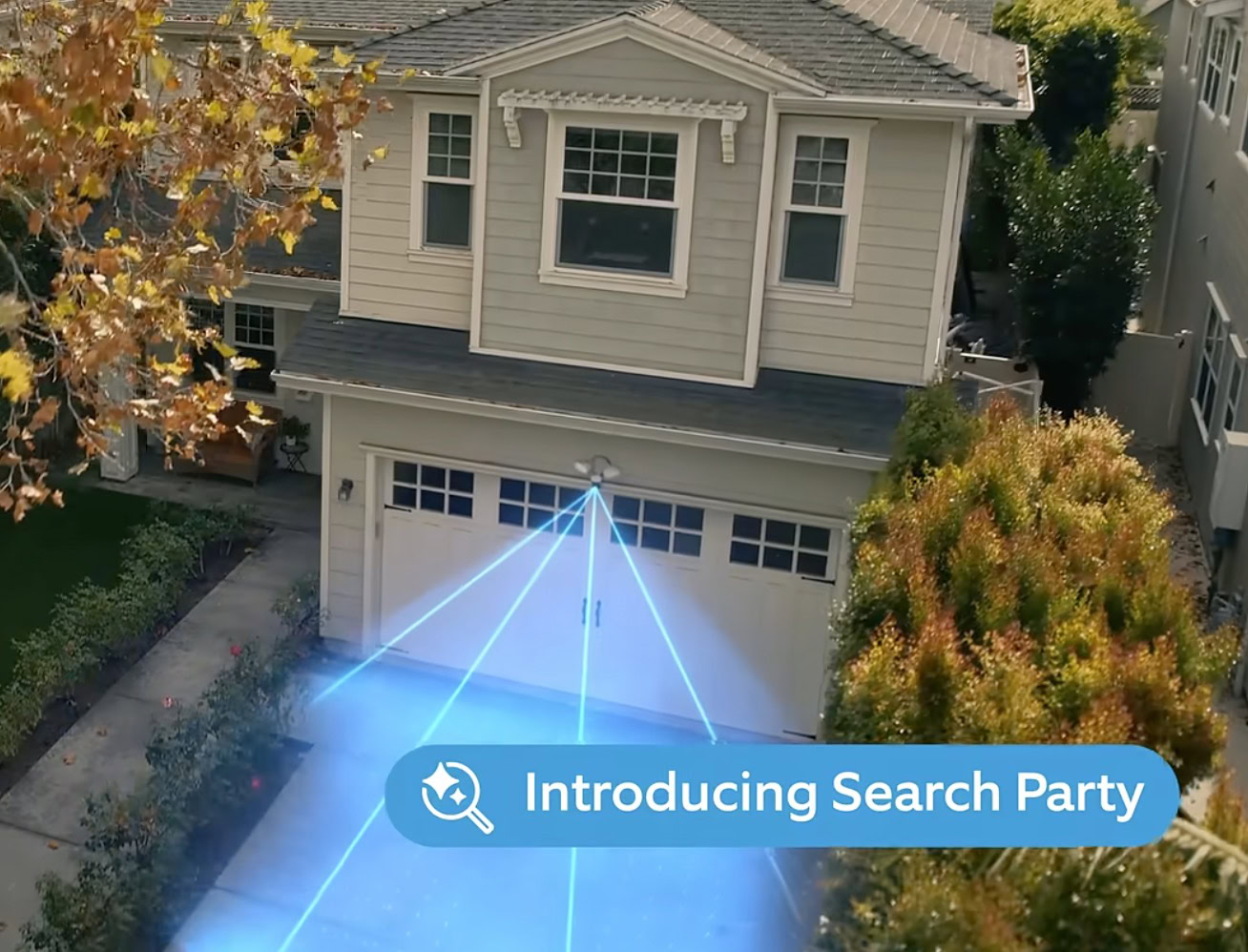
Siminoff framed the feature as a community upgrade. “Before Search Party, the best you could do was drive up and down the neighborhood, shouting your dog’s name in hopes of finding them,” he said.
The new setup allows entire neighborhoods to participate at once. He emphasized that it is “available to everyone for free right now” in the US, including people without Ring cameras.
Amazon paired the launch with a $1 million initiative to equip more than 4,000 animal shelters with Ring systems. The company says the goal is faster reunification and shorter shelter stays.
Every element of the rollout leaned toward public service language.
The system described in the ad already performs pattern detection, object recognition, and automated scanning across a wide network of private cameras.
The same system that scans footage for a missing dog already supports far broader forms of identification. Software built to recognize an animal by color and shape also supports license plate reading, facial recognition, and searches based on physical description.
Ring already operates a process that allows police to obtain footage without a warrant under situations they classify as emergencies. Once those capabilities exist inside a shared camera network, expanding their use becomes a matter of policy choice rather than technical limitation.
Ring also typically enables new AI features by default, leaving users responsible for finding the controls to disable them.
Ring’s broader business strategy provides context. The company maintains partnerships with police departments and with surveillance firms such as Flock and Axon. These relationships expand access to footage, metadata, and automated analysis across jurisdictions.
About 30 percent of US households have video doorbell cameras, with Ring among the most common brands. That density gives any shared detection feature immediate reach across daily life.
Ring also offers a beta feature called “Familiar Faces.” The company says it “uses Ring Artificial Intelligence (AI) to recognize people.” Users train the system to identify individuals and receive alerts when those people appear.
The feature works with continuous recording, capturing audio and video. This capability received no mention during the Super Bowl broadcast.
Public reaction unfolded quickly. Many viewers described the ad as unsettling. One person wrote that the commercial was “creepy.” Another asked how long it would take before the same system tracked people instead of pets. Several comments focused on the idea of neighborhood-wide surveillance being presented as a friendly upgrade.
There was approval as well. Some viewers praised the ad as the best of the night and applauded Ring for making the feature free. That response highlights how easily adoption grows when participation feels helpful and optional.
Of course, Ring says privacy remains under user control. Camera owners can ignore alerts or choose whether to share footage. That control exists inside a system Ring designs, updates, and expands.
The Super Bowl ad emphasized reunions and relief. It avoided discussion of how large-scale automated scanning becomes routine once framed as neighborly behavior.
Search Party will reunite dogs with their owners. Ring says the feature already helps return more than one lost dog per day. It also extends a network that already records daily movement across American neighborhoods.