
Angela Merkel used her first major European platform since leaving office to tell the EU exactly what it wanted to hear: keep regulating speech online, and don’t worry too much about getting it wrong.
The former German chancellor, speaking Tuesday at the European Parliament in Strasbourg, urged the bloc to “continue regulating the social media” and artificial intelligence. “To believe that responsibility for spreading information is no longer necessary, that accountability – there should be no accountability for lies, then that would undermine democracy,” she told the chamber.
Lies. Who decides what counts as a lie? In the EU’s model, that question gets answered by the European Commission, by government-appointed regulators, by “trusted flaggers” that platforms are legally required to obey. Not by courts. Not through anything resembling due process.
Merkel knows this system well. Her government built the prototype. Germany’s NetzDG law, passed under her chancellorship in 2017, required platforms to delete “clearly illegal” content within 24 hours or face fines up to €50 million.
The people whose speech got censored under it included a satirical magazine, a political street artist, and an opposition party leader. NetzDG became an export product, copied by governments in Russia, Turkey, and across Southeast Asia, each adapting it to their own definition of “illegal.”
The EU took the concept continent-wide with the Digital Services Act, which requires major platforms to assess and reduce “systemic risks,” a category broad enough to cover “civic discourse,” “electoral processes,” and “public security.”
The Commission writes the rules, decides whether platforms comply, and levies fines of up to 6% of global revenue when they don’t. No independent prosecutor. X is currently challenging the first DSA fine ever imposed, a €120 million penalty from December 2025, arguing the process involved “grave procedural errors” and “systematic breaches of rights of defence and basic due process.”
More than 50 European NGOs have warned that the DSA’s vague terms could violate the EU Charter’s own free expression protections. The Commission’s response was to declare the law “content-agnostic” and move on.
Merkel acknowledged none of this. She told parliamentarians that “perhaps mistakes will be made, but we learn through mistakes.” That’s cold comfort when the mistakes involve censoring legal speech and silencing political opposition through systems with no judicial oversight and no meaningful appeal.
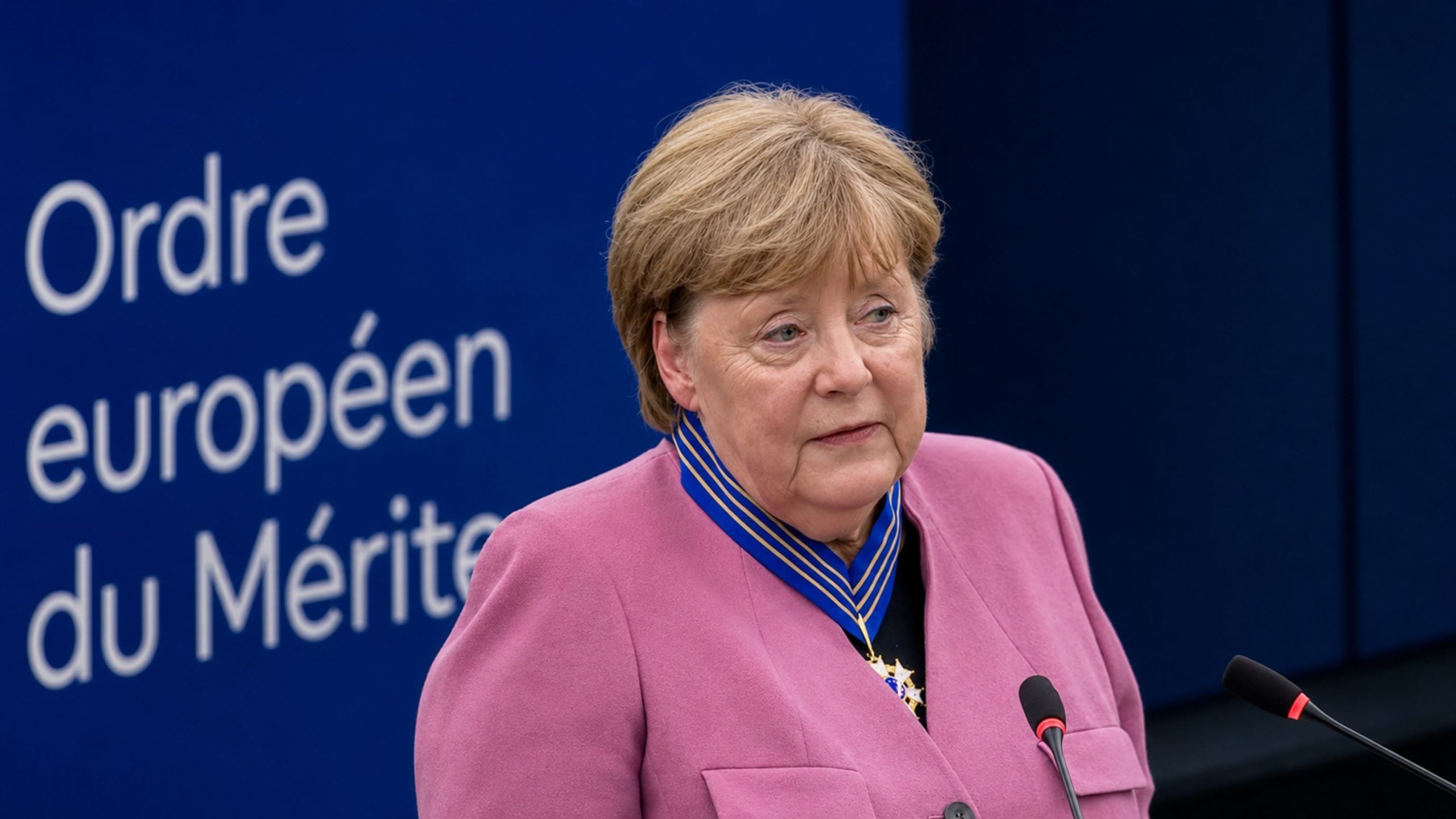
Her remarks came at the inaugural ceremony for the European Order of Merit, where she was honored alongside 19 other laureates, including Lech Wałęsa, Moldovan President Maia Sandu, and Volodymyr Zelenskyy. She framed regulation as essential to democracy. “We’ve had 75 years of European thought,” she said. “Peace, prosperity, and democracy.”
Democracy requires that citizens can speak, argue, and be wrong without a regulator deciding which claims are permissible. The EU’s apparatus does the opposite. Merkel said mistakes would be made. She didn’t say who would pay for them. The answer, as always, is the people who get silenced.