Poland’s parliament has completed work on the second law implementing the EU’s Digital Services Act (DSA) censorship law, when the Sejm (the lower house) on October 22 accepted most of the Senate’s amendments, and on October 23 the act went to President Karol Nawrocki for signature.
This is the blocking power that Nawrocki in January vetoed, and the government then split it off into a separate bill, and now the president is faced with it again.
The law sets up a national procedure for issuing official orders to block “illegal” content on the internet, that is, threats, “hate speech,” as well as content that could be “harmful” to children.
The power to order such blocking will be given to the head of the telecoms regulator UKE, and the chairman of the broadcasting council KRRiT, the latter for video platforms. These officials will act on requests from prosecutors, the police, the tax administration (KAS), copyright holders, and internet users.
UKE will issue an order if the evidence presented “leaves no doubt that the content is illegal.”
Those handling the requests must not be members of a political party or publicly display their political views.
The ministry in charge has explained that “In certain cases, decisions can be enforced immediately, to prevent the further spread of content that threatens users.”
If a website continues to host the content, or ignores the order, its domain will be put on a special register run by UKE, and internet providers must remove it from the systems “that translate internet domain names into IP addresses” within 48 hours.
“The act on access to public information does not apply to the register.”
A user who has posted the content that is subject to the blocking order will normally have 2 days to respond, but the Senate cut that down to 24 hours for the content covered by immediate enforcement.
“There is no appeal against the decision, nor a request for the case to be reconsidered,” the law states, but “A party may file an objection to the decision within 14 days of its delivery.” This is done by filing a complaint with a common court.
“Hate speech” cases falling under Criminal Code articles 256 and 257 will be handled by courts, while those under article 119 §1 will be handled by regulators.
The Senate’s changes also included adding to the cases that can be immediately enforced those where prosecutors or the police request blocking of content that may violate article 119 §1 of the Criminal Code, which “penalises the use of violence or unlawful threats because of race, national or ethnic origin, religion or lack of religion and political affiliation.”
The Senate also moved these cases from the courts to the regulators, to allow blocking “without delay.”
The Sejm accepted these changes and also cut the time before the law takes effect to three months.
The Sejm accepted the bill on October 8 by 242 votes to 61, with 136 abstaining. The Konfederacja party tried to remove the blocking chapter, but that was rejected by 22 votes to 279. Another attempt was to remove from the list of illegal content, hate speech, but that got only 45 votes, while 397 MPs were against.
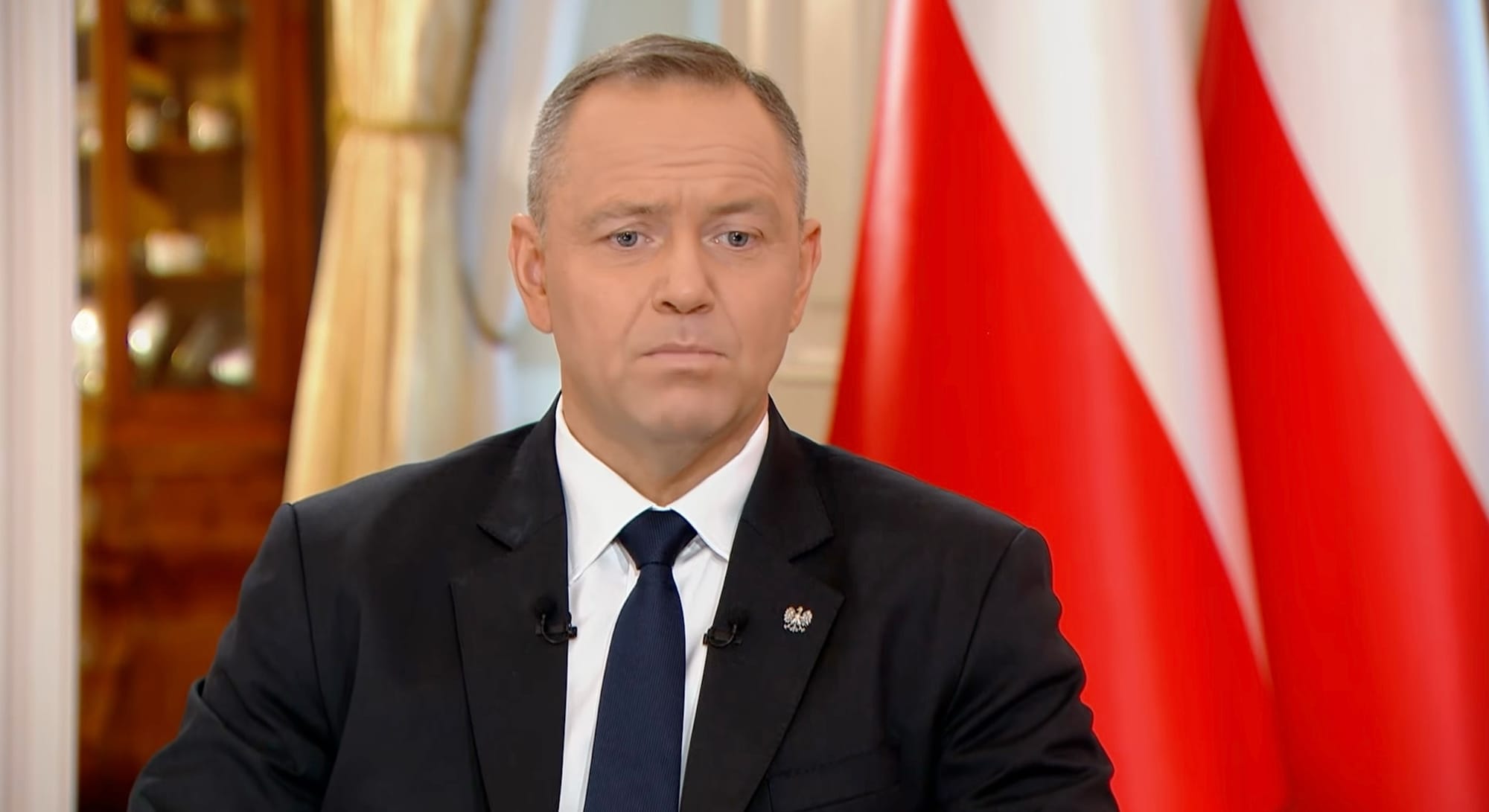
The reason the law is now back to the president is that in January, Nawrocki vetoed it, saying, “As president, I cannot sign a bill that effectively amounts to administrative censorship.” At the time, he also said, “A situation in which a government official decides what is permitted on the Internet is reminiscent of the Ministry of Truth in Orwell’s 1984.”
He was also critical of the review process, saying, “Instead of real judicial review, an absurd solution has been introduced: an objection to an official’s decision, which citizens must file within 14 days.”
Meanwhile, the president has not changed his stance, as on October 15 he said, “I have nothing against eliminating sites where children have been harmed,” but added, “the proposed law, which is meant to lead us towards eliminating from social media specific views that are not compatible with the ideas of either the prime minister or the European Commission, is unacceptable to me.”
When asked if he would sign the law, he replied, “If a law lands on my desk that does not break or block freedom online...”
Deputy Prime Minister and Digital Affairs Minister Krzysztof Gawkowski said, “Now the decision belongs to the President. I am counting on a signature on the law, because we cannot delay any longer in giving citizens more effective protection online.”
Deputy digital affairs minister Dariusz Standerski said, “The internet cannot be a space where perpetrators feel unpunished and the omnipotence of digital platforms hits the victims.”
Back in June, the cabinet approved the package, and Gawkowski said it would allow “paedophile material, child grooming attempts, fraud and identity theft” to be blocked faster “and under full judicial oversight.”
In May 2025, the European Commission took Poland to the EU Court of Justice for not implementing the DSA.
The child abuse cases are clearly the serious and emotional selling point of this regulation – but the legal and technical machinery is there to also censor “threats” and “hate speech” – and the Senate made sure that “political affiliation” is now also on the fast track, on the request of the police.