The latest attempt by a US state to shield its residents and companies from the long and heavy hand of foreign censorship is a draft bill in Wyoming that has passed a committee vote, and is now expected to be considered by the full legislature in 2027.
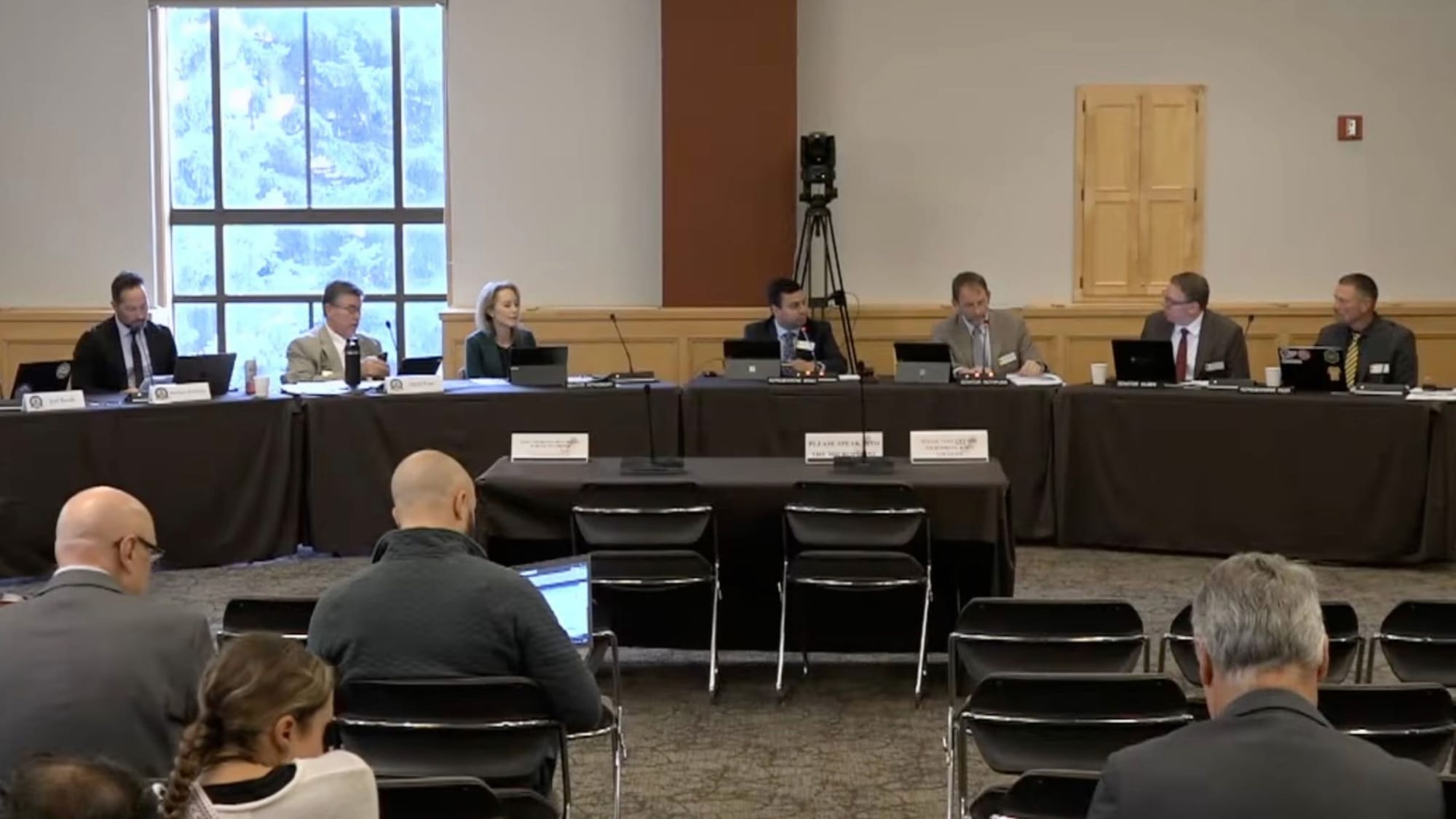
Wyoming's Select Committee on Blockchain, Financial Technology and Digital Innovation Technology approved the new draft 4 to 1 at its meeting on September 28 and 29. It becomes a committee bill in the 2027 session, and if it then becomes law, it would take effect on July 1, 2027.
The draft is numbered 27LSO-0009, working draft 0.7, and the committee is the sponsor. The front page says, "DRAFT ONLY NOT APPROVED FOR INTRODUCTION."
The bill's stated purpose is two-pronged: to "Protect the constitutional rights of Wyoming residents and business entities from the extraterritorial application of foreign censorship laws," and to "Promote Wyoming's economy by fostering a safe harbor for digital innovation and by ensuring that foreign threats do not deter investment in Wyoming."
The bill's definition of a "foreign judgment" is very broad, and would cover "any judgment, decree, order, conviction, sentence, subpoena, administrative action, fine, penalty or similar measure issued by a foreign state or international organization."
An "international organization" is defined as, "Any supranational organization, intergovernmental organization or multilateral institution that exercises binding regulatory or adjudicative authority over conduct occurring outside the United States, including authority delegated by its member states."
What the draft does is bar any Wyoming state court from recognizing, enforcing, or giving effect to any foreign judgment that imposes liability or compels action arising from conduct where protected expression is a substantial factor or a necessary element of the liability or compelled action.
It also lists four things the state of Wyoming itself may not do: provide assistance or cooperation in collecting, enforcing or giving effect to any foreign judgment; arrest, detain or surrender any person pursuant to a foreign extradition request, international arrest warrant or similar process; assist in investigating, prosecuting, sanctioning or punishing any person; or honor or execute a request under a mutual legal assistance treaty, letters rogatory or other international agreement or mechanism.
In case a person or business believes a foreign judgment violates their rights, they can sue the state of Wyoming, its subdivisions, or employees, for a declaratory judgment that the foreign judgment is unenforceable, or for an injunction. That's the only remedy the bill provides. And while the original bill (HB 70) allowed for "statutory damages of one million dollars ($1,000,000.00) per violation," the new draft has this: "No cause of action authorized under subsection (j) of this section shall be construed to authorize the award of monetary damages, costs or attorney fees."
A Wyoming court may, however, sever the part of a foreign judgment that is inconsistent with the bill's provisions and enforce the rest. State agencies may ask the attorney general, and local governments may ask their district attorney, whether protected expression is a substantial factor in a case. If they act in good faith on that opinion, they are immune from liability, and the state will pay for their defense.
The definition of protected expression is based on the First Amendment, and two sections of the Wyoming constitution. A substantial factor is defined as protected expression that "materially contributes" and is "more than incidental or tangential."
The draft also spells out that it does not regulate foreign conduct, does not waive any foreign state's sovereign immunity, and does not conflict with the foreign affairs powers of the United States.
Reclaim The Net reported about the first version of this bill in January, the one that let people sue foreign states and international organizations for damages.
We also reported about the UK's Ofcom asking American police to collect a fine for a speech-related offense, and how Ofcom used a treaty to send 197 censorship orders to American companies.
We also covered the federal GRANITE Act, while a version of that bill was also introduced in New Hampshire.
The Wyoming bill that was first introduced in January, HB 70, was prompted by the UK's Online Safety Act. It was prompted by the UK's Online Safety Act, and the threat of fines of up to $25 million or 10 percent of a company's total worldwide revenue for non-compliance.
HB 70 also named Brazilian supreme court Justice Alexandre de Moraes ordering X and Trump Media and Technology Group to censor accounts and hand over user data.
That bill passed the House, then the Senate Appropriations Committee, but ran out of time and died in March.
That is now gone, and all that is left is the ability of those targeted to sue the state of Wyoming to make it keep its promise to protect them.