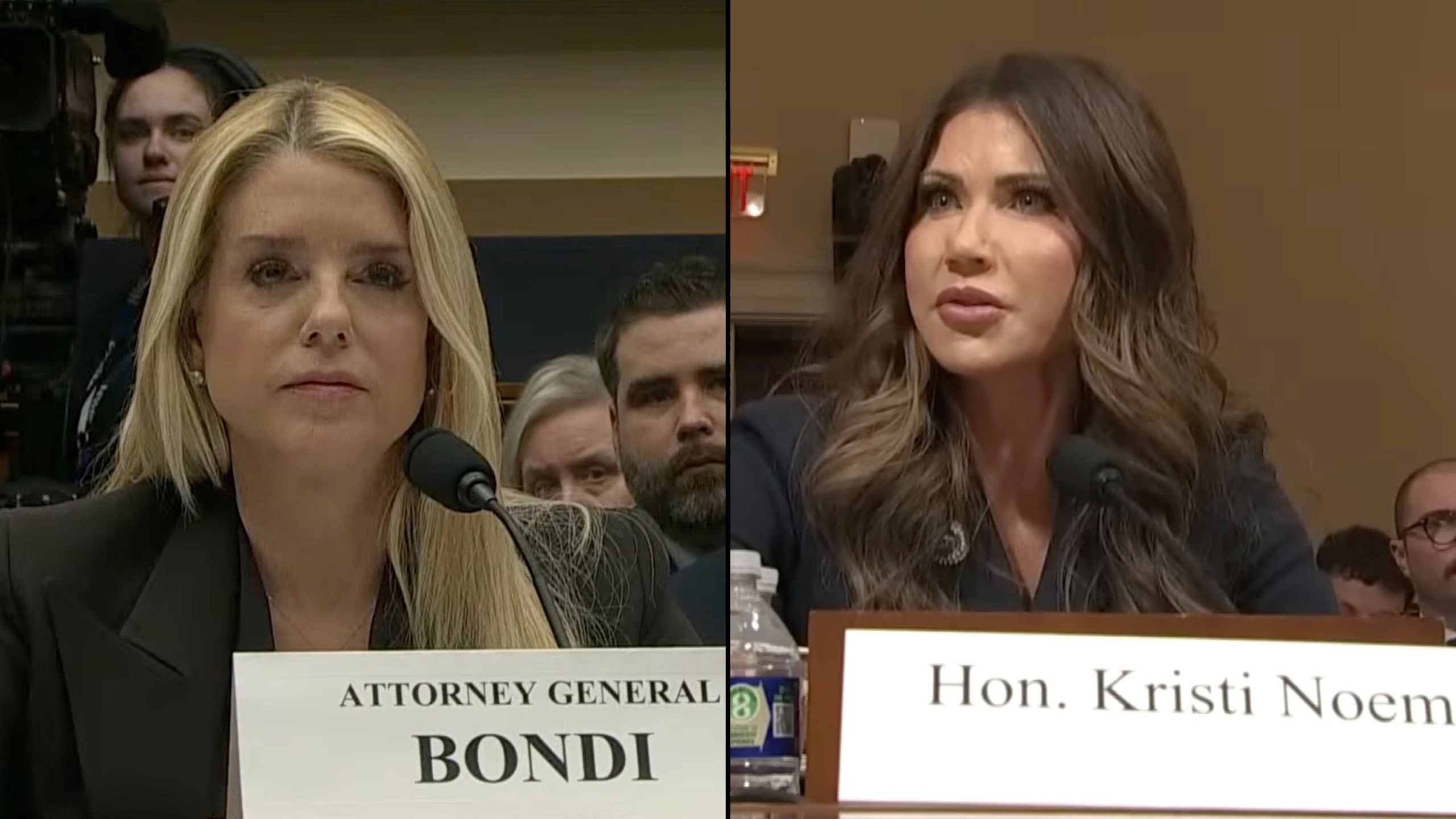
Attorney General Pam Bondi and Homeland Security Secretary Kristi Noem have been accused of pressuring Apple and Facebook to remove platforms that let Americans share videos and information about immigration enforcement operations.
The Foundation for Individual Rights and Expression is now suing both officials on behalf of the two Americans whose platforms were deleted.
We obtained a copy of the lawsuit for you here.
The federal government’s stated justification is officer safety. Bondi claimed these platforms were being used to “dox and target” ICE agents, and that “The wave of violence against ICE has been driven by online apps and social media campaigns designed to put ICE officers at risk just for doing their jobs.”
The comparison that complicates this argument: Waze. The navigation app, owned by Google, has let users report police locations for years. Apple Maps does the same. These features help drivers avoid speed traps, and law enforcement has objected to them before. But no attorney general has demanded Apple remove its own Maps app from the App Store.
Mark Hodges built Eyes Up, an app that lets users upload, archive, and view video footage of ICE operations. His company, Kreisau Group, exists to preserve evidence of potential governmental abuses of power. Each video is reviewed before posting, then tagged by location and time on an interactive map. The app archives footage; according to FIRE’s lawsuit, it is “not useful for tracking ICE location or movement in real time.”
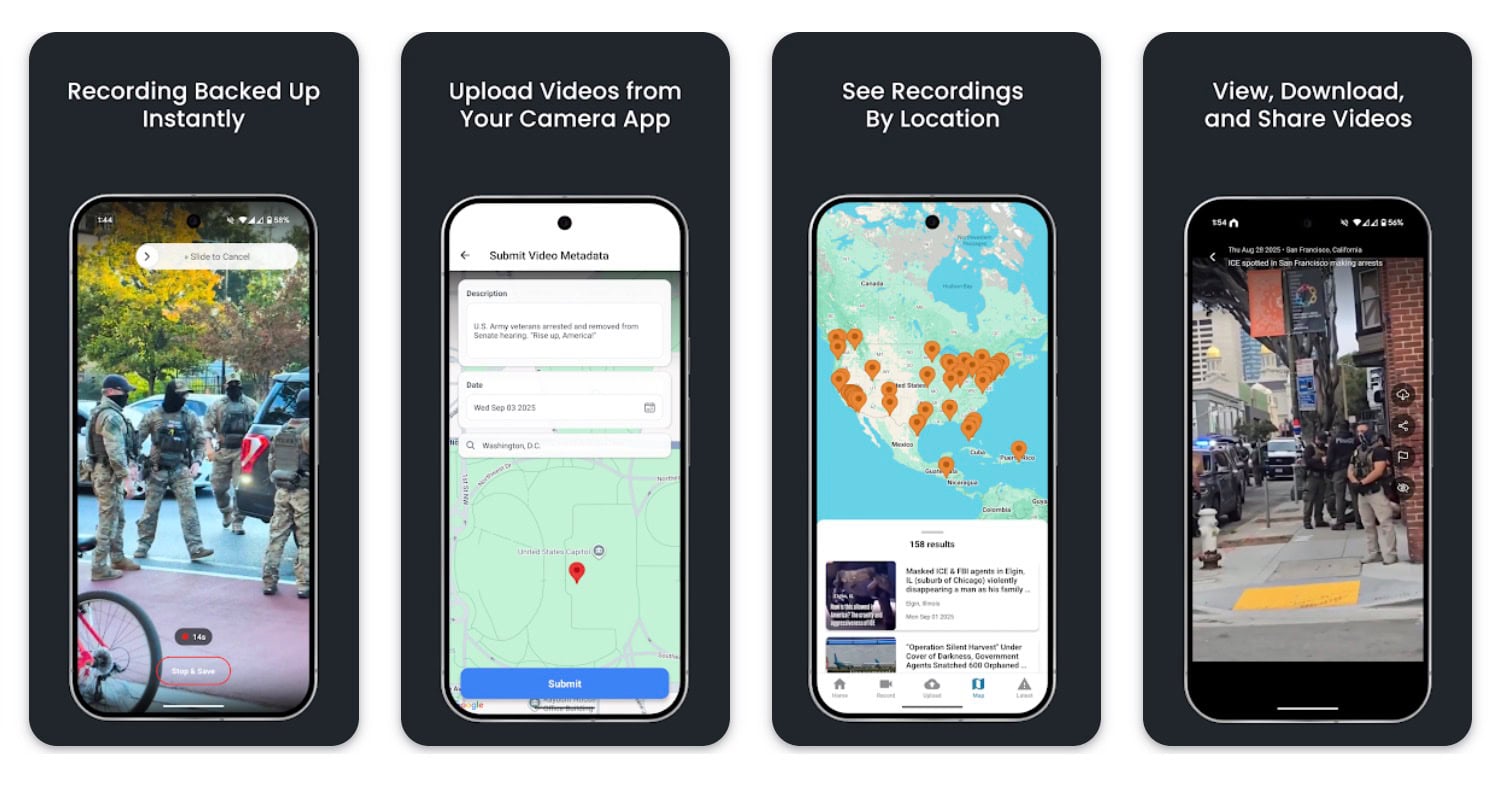
Apple examined the app in August 2025 and approved it. Then, on October 2, Bondi told Fox News: “We reached out to Apple today demanding they remove the ICEBlock app from their App Store — and Apple did so.” Apple deleted several ICE-related apps, including Eyes Up. The new justification: the app violated rules against “mean-spirited” content. A month earlier, when Apple actually reviewed the app, no such concern existed.
“As U.S. citizens, we have the right to keep each other informed about what our government officials are doing and how they’re doing it,” Hodges said. “Government transparency and accountability are fundamental in a free society.”
Kae Rosado ran a Facebook group called “ICE Sightings – Chicagoland.”
She started it in January 2025. The group let people share real-time information about enforcement operations. Rosado prohibited anything threatening or violent; the group required discussions to remain “kind and courteous.”
By September, when ICE launched “Operation Midway Blitz” with aggressive enforcement across Chicago, the group’s membership exploded to nearly 100,000 people.
In October, without any prior warning, Facebook disabled Rosado’s group.
The legal question isn’t whether officer safety matters. There’s no doubt that ICE officers are facing threats of violence. The key question is whether the government can pressure private companies to delete speech it dislikes, where no actual crime has been committed, by invoking safety concerns, and the broader implications of that.
This isn’t the first time an administration has leaned on tech companies to delete speech it disliked while invoking public safety. During the Covid-19 pandemic, the Biden administration pressured social media platforms to remove posts about vaccines, lockdowns, and the origins of the virus. The justification was familiar: lives were at stake and platforms had a responsibility to act.
White House officials flagged specific posts and accounts for removal, arguing that the posts were getting people killed.
The First Amendment protects the right to document and discuss what law enforcement does in public. The Supreme Court said as much in City of Houston v. Hill: “to oppose or challenge police action without thereby risking arrest is one of the principal characteristics by which we distinguish a free nation from a police state.”
If someone uses publicly available information to commit a crime, they can be prosecuted for that crime. But the solution under the First Amendment is to punish the criminal act, not to silence everyone sharing lawful information.
Neither Apple nor Facebook had flagged these platforms for policy violations before the Justice Department made contact. Apple had explicitly approved Eyes Up. Facebook had never restricted Rosado’s group. The timing suggests the government’s “outreach” was the deciding factor.
This lawsuit is seeking a ruling that Bondi and Noem violated the First Amendment and an injunction preventing similar actions going forward.