A committee room on Capitol Hill has become an unlikely vantage point for observing a transformation underway across the Atlantic.
Lawmakers on the House Judiciary Committee convened on Wednesday to examine how European speech regulation now travels far beyond national borders, reshaping the conditions under which Americans speak, publish, and innovate.
The hearing’s title, “Europe’s Threat to American Speech and Innovation: Part II,” suggested a continuity of concern rather than a single dispute, one rooted in the growing reach of law and bureaucracy into the domain of expression.
Witnesses presented a consistent account. European governments, they argued, have refined a system that avoids the blunt instruments of overt bans while still achieving compliance.
Pressure is shifted onto intermediaries, reputations are quietly destroyed, and the costs of dissent are distributed across professional and personal life rather than imposed through a single visible sanction.
The erosion of tolerance behind formal guarantees
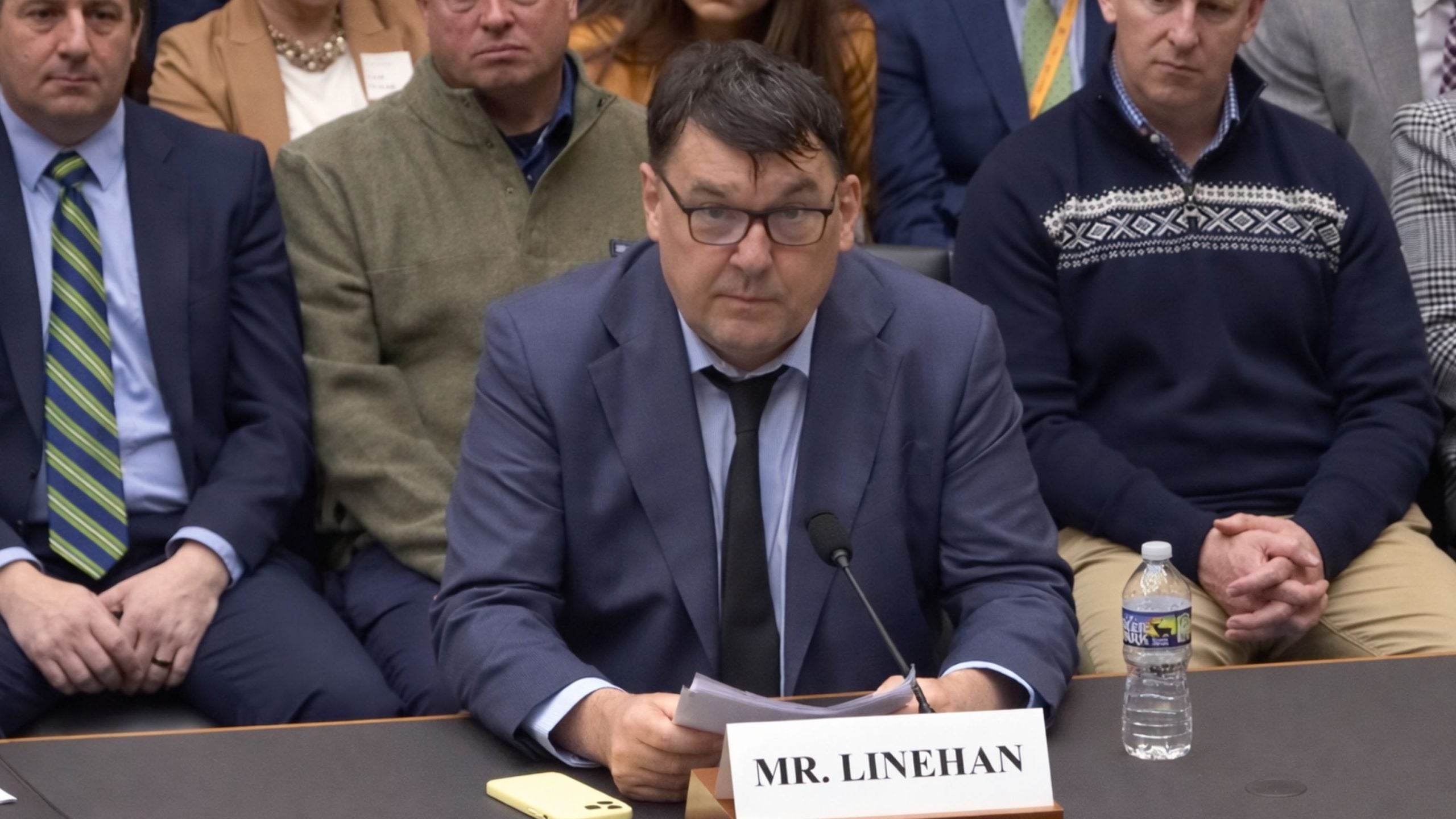
Comedy writer Graham Linehan, who you’ll remember was arrested over a tweet after arriving at London’s Heathrow Airport, framed the issue in biographical terms, tracing the collapse of a three-decade career to his refusal to accept prevailing claims about gender and medicine: “These were not extreme positions. But for holding them, I became the target of a series of harassment campaigns that cost me my career, my marriage, and eventually drove me from my home.”
His testimony sketched a system in which the appearance of liberal legality masks an informal architecture of enforcement. “In the UK, police record ‘non-crime hate incidents’ against citizens who have broken no law…When employers fire workers for protected speech, when banks close accounts, when publishers drop authors, when platforms suspend users; the government’s hands stay clean. The censorship happens. The state didn’t do it.”
The danger, Linehan suggested, lies not in the abolition of rights on paper but in their hollowing out through administrative and social means.
“In Britain, we have discovered that you can have formal free speech and no free speech at all.” When ideology gains the power to define moral legitimacy, he added, even foundational concepts such as sex become subject to enforcement. His appeal to lawmakers was direct: defend open debate and insist that allied governments respect their own court rulings.
Linehan also suggested that the police are targeting people to relieve pressure on Prime Minister Keir Starmer. “Basically the UK police are now in this situation where they are trying to contain every problem that Keir Starmer doesn’t want to talk about,” Linehan siad. “And that’s all they do.”
Regulation as export policy
Where Linehan spoke as a casualty, Irish barrister Lorcán Price spoke as an analyst of law. As counsel for Alliance Defending Freedom International, which has done good work on this issue, he detailed how the European Union’s Digital Services Act (DSA) and Digital Markets Act now operate extraterritorially.
Enforcement actions against American firms, including a massive fine on X, were presented as “part of a broader campaign of fines and investigations…designed to compel US companies to become little more than a censorship squad.”
Under Articles 34 and 35 of the DSA, platforms designated as systemically important must assess and mitigate vaguely defined “systemic risks.”
Price noted that what qualifies as “illegal content” varies sharply among member states and routinely includes categories such as hate speech or disinformation that enjoy constitutional protection in the United States.
He added that the EU’s censorship campaign is “about imposing European laws globally” and that “hate speech has no real meaning other than speech they hate.”
Global companies, seeking uniform compliance, respond by suppressing lawful American speech. As he put it, “speech considered legal in the US” is erased in order to satisfy European regulators.
The enforcement model deepens this leverage. Parallel investigations by the European Commission and national bodies such as Ireland’s Coimisiún na Meán allow regulators to demand access to algorithms, conduct inspections, and impose penalties large enough to alter corporate behavior worldwide.
Price summarized the implicit bargain bluntly: “Drop your commitment to free speech and the harassment will end.”
His criticism extended to Britain’s Online Safety Act, which empowers the Office of Communications to levy fines reaching ten percent of global revenue for failures to address loosely defined harms.
Provisions addressing messages that cause “non-trivial psychological harm,” he warned, open the door to policing foreign speech merely because it is accessible within the United Kingdom.
The endpoint of this system, in his words, is unmistakable: “The EU wants to transform successful American companies into a free speech Stasi, making those businesses the censorship enforcers for the ruling elite of Europe.”
Criminal law and sacred text
The most stark illustration of these dynamics came from Finland. Legislator Päivi Räsänen described how a 2019 social media post quoting scripture, written in response to her church’s involvement in the Helsinki Pride event, triggered a prolonged criminal process. “For this exercise of my free speech, I was investigated by the police and interrogated for more than thirteen hours,” she told the committee.
Prosecutors charged her with three counts of “agitation against a minority group” for a pamphlet, a radio interview, and the tweet itself, offenses categorized under Finland’s statute on war crimes and crimes against humanity.
Although acquitted twice by lower courts, she now awaits a final ruling from the Finnish Supreme Court following renewed appeals.
Räsänen emphasized that the state’s theory of harm dispensed with intent. Prosecutors argued that only the subjective interpretation of readers mattered, alongside demands for fines and censorship of her writings. “A court has no business judging the Bible’s teachings and our right as Christians to uphold and express them,” she said.
Her account highlighted how duration and uncertainty themselves function as penalties. “We have faced years of investigation, public scrutiny, and legal uncertainty. This creates a chilling effect…all must be careful what they say because the police could come knocking at their door too.”
She linked her experience to the broader regulatory framework now emerging across Europe, warning that the Digital Services Act extends similar pressures internationally. “Censorship is one of the greatest existential threats to today’s democracies in Europe…When the state controls which ideas and beliefs may be expressed, democracy becomes fragile.”
Selective free speech
During questioning, lawmakers turned their attention to the American Civil Liberties Union, pressing what they described as a selective understanding of speech rights.
Committee members challenged the organization’s representative, Deepinder Mayell, to address evidence that senior officials within the Biden White House had urged social media companies to remove posts, including commentary and satire related to COVID-19.
Asked directly whether the Biden administration had engaged in censorship of Americans, Mayall declined to give a clear answer, responding instead that he was “here to talk about what’s happening on the streets” and about “the most significant threat to free speech,” referring to protests against Immigration and Customs Enforcement (ICE).
The exchange provoked visible irritation among several members, who argued that the ACLU’s historical identity rested on its willingness to defend expression regardless of popularity or political alignment.
A narrowing ocean
The testimonies described a regulatory order that relies less on explicit prohibition than on diffuse coercion.
The DSA, DMA, and Online Safety Act were presented as pillars of a system that transfers the burden of enforcement to private actors while reserving the power to punish noncompliance with fines capable of reshaping global markets.
For American speakers and companies, geography offers little refuge when a single platform policy governs billions of users.
Linehan’s arrest, Räsänen’s prosecution, and Price’s account of regulatory pressure form parts of a single narrative about authority, legitimacy, and speech in liberal democracies.
The witnesses did not argue that Europe lacks constitutions or courts. They argued that rights survive only when backed by a political culture willing to tolerate dissent.
The warning offered to lawmakers was therefore strategic rather than sentimental. As Linehan concluded, “The Atlantic is not as wide as you think.”