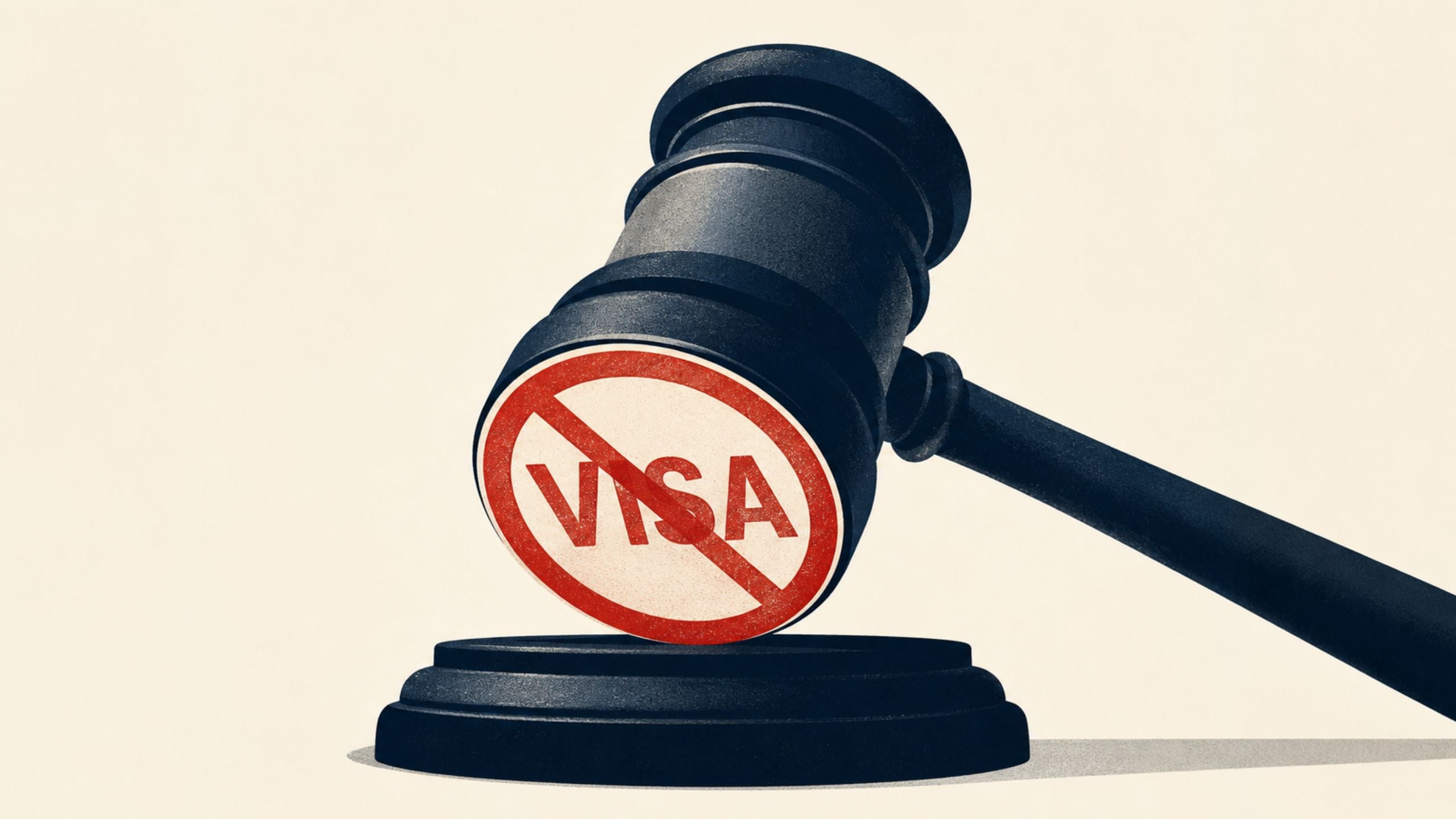
A federal judge has blocked the Trump administration from wielding visas as a weapon against foreign researchers who pushed for online censorship.
Chief Judge James Boasberg of the U.S. District Court for the District of Columbia froze the State Department policy on July 14, ruling that it likely tramples the First Amendment by punishing one viewpoint and rewarding its opposite.
The policy let officials deny entry, pull visas, or deport noncitizens the government labeled complicit in “censoring Americans.” Secretary of State Marco Rubio announced it in May 2025, warning that he would not tolerate foreign officials who “demand that American tech platforms adopt global content moderation policies or engage in censorship activity that reaches beyond their authority and into the United States.”
Boasberg read the policy as a thumb on the scale. It “presses its enforcement thumb against one side of the scale: the view that platforms should do more to moderate content, label disinformation, restrict abuse, share data with researchers, or take responsibility for the harms their systems amplify,” he wrote.
The government “has set itself against those whose work favors more moderation rather than less.” A noncitizen who argued for less moderation, he noted, had nothing to fear.
That is textbook viewpoint discrimination, the government line-drawing the First Amendment exists to forbid. Boasberg granted a stay under federal law, finding the plaintiff likely to win the case.
The plaintiff is the Coalition for Independent Technology Research, a nonprofit whose members include some of the most aggressive architects of online censorship.
The State Department sanctioned five Europeans under the policy in December 2025. Thierry Breton, a former EU commissioner, helped write the Digital Services Act, which forces American companies to delete content that Europeans find objectionable.
Imran Ahmed runs the Center for Countering Digital Hate, which has campaigned to strip accounts from platforms.
Clare Melford runs the Global Disinformation Index, which built advertiser blacklists to choke revenue to news outlets it judged guilty of “disinformation.” Josephine Ballon and Anna-Lena von Hodenberg co-founded HateAid, a German group that pursues legal action against speech it calls “digital violence.”
Rubio accused the coalition of leading “organized efforts to coerce American platforms to censor, demonetize, and suppress American viewpoints they oppose,” and called the five “leading figures of the global censorship-industrial complex.”
According to the ruling, the government does not get to punish speech it dislikes, even the speech of people who would gladly punish yours.
Carrie DeCell, an attorney at the Knight First Amendment Institute at Columbia University who represents the coalition, said the ruling “recognized the serious constitutional harms” the policy is causing. “This policy punishes researchers for work the public needs, and the First Amendment protects,” she said. In court she called the policy “expansive and incredibly vague, and the chilling effects are correspondingly enormous.”
The coalition says the fear is already reshaping behavior. Researchers “have dropped out of conferences and opted out of travel to meet with colleagues, shifted research topics entirely to avoid negative attention, and in some cases, even stepped back from affiliating with the coalition out of fear for their safety,” the group said in a May statement.
Boasberg traced how the policy grew past its original terms. “What began as a visa-restriction policy later expanded,” he wrote, “into a broader campaign against noncitizens who work on misinformation, disinformation, fact checking, content moderation, compliance, and trust and safety.”
The State Department is standing firm. “The Trump administration believes that aliens who are or were involved or complicit in censoring American citizens must face appropriate consequences,” a spokesperson said back in May. “An American visa is a privilege, not a right.”
Boasberg has not issued a final judgment, and the government can appeal. For now, the policy is frozen.