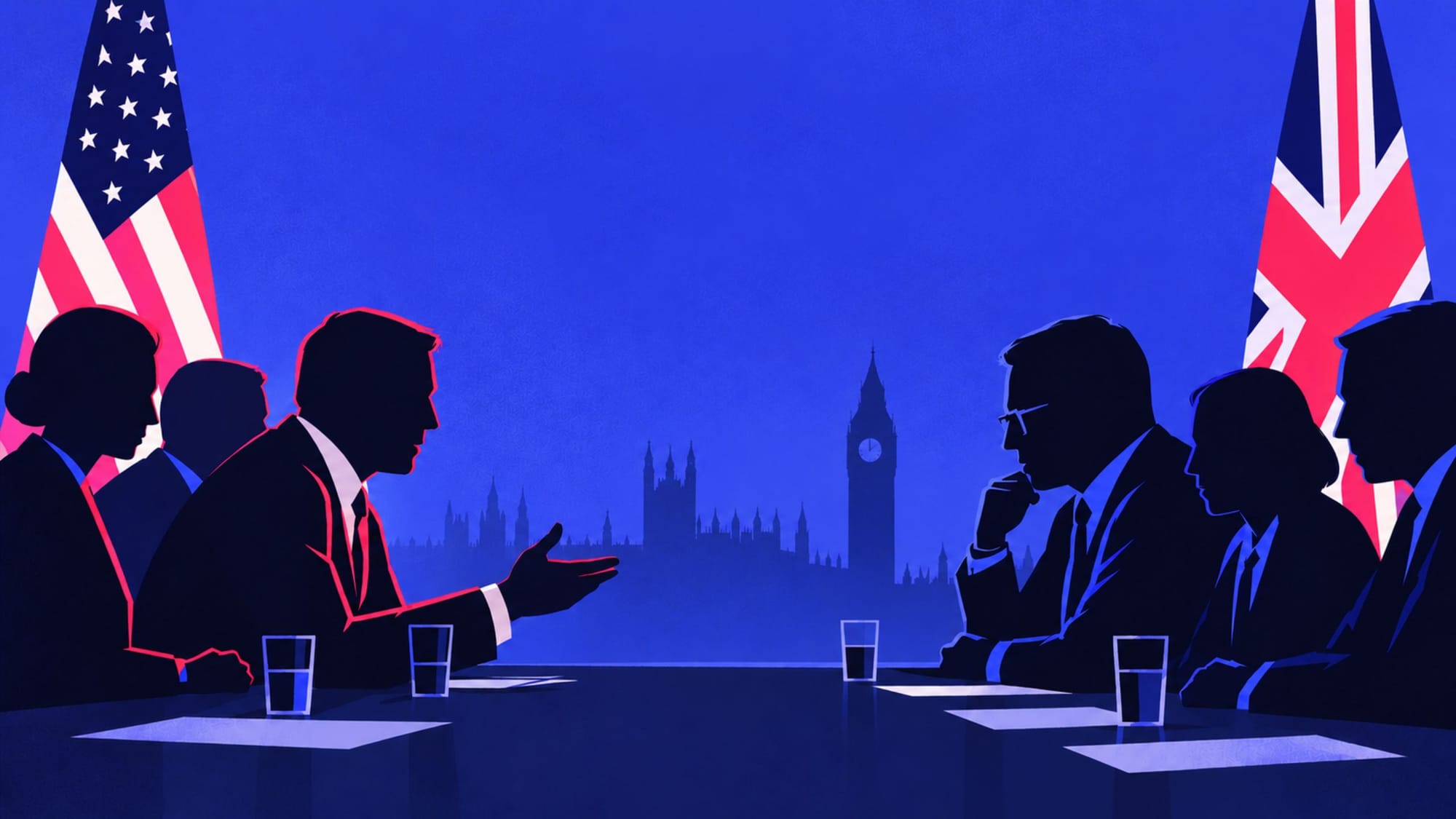
British officials were reportedly summoned to the US embassy in London earlier this week to be told that the US government was unhappy with three parts of the UK’s online censorship law, the Online Safety Act.
The meeting took place on Monday and those who were called in were from the Department for Culture, Media and Sport (DCMS), the Foreign, Commonwealth and Development Office (FCDO), and other departments. On the US side, it was Robert W. Thomas, Deputy Chief of Mission at the US Embassy in London, who led the meeting, according to a report from PoliticsHome.
The three parts of the law that the US has taken issue with are: the fees that regulator Ofcom charges to fund its work, the ban on under-16s using social media, and the “trusted media” prominence plans.
The US reportedly objects to the way the fees are calculated – currently as a proportion of global revenue, rather than UK revenue, which the US says is unfair. The second point of contention is the ban on under-16s, which the US sees as discriminatory against American tech companies. And thirdly, the US once again warned that changing algorithms as the “trusted media” plan entails could inadvertently affect US citizens.
UK officials who were at the meeting have not commented on the report, while the government called it a routine engagement. But the report is not entirely surprising, given that the US had already warned the UK about the “trusted media” plan earlier this month.
Meanwhile, the UK government is selling the under-16 ban as a way to protect children, and former Prime Minister Keir Starmer has said that the country is “going further than any country in the world by banning social media for under-16s and putting wider protections in place to give kids their childhood back. This is a line in the sand.”
But nobody appears to be objecting to the principle of online "age verification," which is what this ban relies on, meaning that everyone will have to prove their age in order to use social media.
“Parents want to keep their kids safe and happy, but the online world has made that harder than ever,” Starmer has said, while Technology Secretary Liz Kendall spoke about taking “power away from the tech giants and putting it back in parents’ hands.”
And Culture Secretary Lisa Nandy’s comments around the “trusted media” plan were that it is “vital that we make sure that people have better access to trusted and accurate news and that our regulated public service media is seen and heard in the fierce battle against mis and disinformation.”
But this “fierce battle” is censorship, and the US reaction to it, as well as to the other two contentious points, is clearly not motivated by a desire to protect speech, but rather, to protect US companies.
The “trusted media” plan would designate certain providers whose content would have to be given a prominent position on platforms’ search results and recommendations. The plan is now at the green paper stage and is out for consultation, and Nandy has said that this will help the TV sector continue to “thrive” and keep producing “top quality UK content.”
Meta, meanwhile, is already suing Ofcom over the fees, with a substantive hearing set for October 13-14, 2026.