Australia’s parliament has passed the Digital Duty of Care bill, which critics say is a censorship law that will have the effect of making online platforms remove lawful speech in order to avoid massive fines.
The bill was approved on Wednesday, November 25, 2026, and now awaits Royal Assent by the Governor-General – a formality. It will come into force a year later.
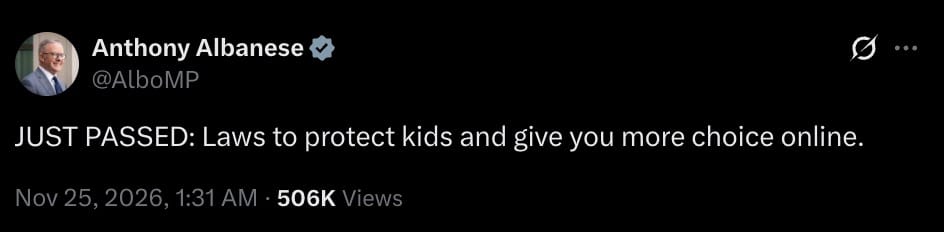
Prime Minister Anthony Albanese announced the news on X, saying, “JUST PASSED: Laws to protect kids and give you more choice online.”
However, this is not how everyone sees it. Its final version that was passed is a result of a deal between the government (Labor) and the Greens.
This version includes fines of up to 5% of global revenue or A$109million. But for the largest platforms, the maximum fines could reach tens of billions of dollars.
Opposition Leader Angus Taylor criticized the bill, saying it introduced “the extraordinary penalties on tech platforms that encourage them to censor lawful speech first and ask questions later, a new regime of private litigation that will be an absolute minefield, and the burdens on small businesses, community organizations and charities that remain unaddressed.”
Some industry groups warned the law “might encourage platforms to become heavy-handed when deciding what content to take down.”
The Labor-Greens deal added several provisions to the original proposal, including the 5% of global turnover fine, and a private right for individuals to sue platforms. This was not in the earlier versions of the bill.
Other additions are more provisions related to addictive features (the original bill already had some), and the eSafety Commissioner will now have more powers, including to have “nudify” apps and sites taken down.
As for the rest of the bill, it introduces a duty of care to protect both children and adults from “harmful” material and conduct.
Adults must be protected from “seriously harmful material and conduct,” including “material or conduct that is reasonably likely to cause serious harm by menacing or harassing an individual.”
Children must be protected from material that is harmful, which includes “material or conduct that encourages or promotes hostile attitudes towards women or gender equality” and material that “glorifies crime or encourages dangerous stunts or seriously harmful practices.”
eSafety will also be able to access information about people’s use of online services, and use “a false or fictitious identity” – i.e., create fake accounts – to do its job.
While the law’s stated goal is to protect children, the commissioner will be able to use fake accounts to pose as children and see what content is being served to them. The same method will be available to “approved researchers.”
The bill also deals with link deletion notices: search engines must stop linking to cyber-bullying material, intimate images, and cyber-abuse material within 24 hours after receiving a removal notice for the same material.
As for privacy, DIGI (a lobby group that says it represents the digital industry) interim managing director Jennifer Duxbury said that “the regulator’s sweeping powers to use fake accounts and access information about people’s use of online services raise serious privacy issues.”
She noted that the law remains too vague, leaving businesses unclear on how to comply or how the new rules will make Australians safer.
In parliament, the bill was criticized as having “extraordinary penalties” that will make platforms censor lawful speech, while creating a “minefield” of private litigation.
Shadow energy minister Dan Tehan called it a “gross overreach” and said that freedom of speech is one of the nation’s fundamental premises.
“Trust us,” is what the government is telling citizens, said Tehan – but, “Now, of all the governments in this nation’s history, the least trustworthy is the Albanese Labor government.”
Opposition leader Taylor said that Labor made a “dirty deal” with the Greens, and that the 42 last-minute amendments tabled by the government “just reveal how ill-conceived and flawed this bill is.”
Communications Minister Anika Wells, on the other hand, compared this bill to reforms like compulsory seatbelts, plain packaging for cigarettes, and gun reform, and said that Big Tech “can no longer be under any illusions.”
Reclaim The Net has covered the Digital Duty of Care bill in the past, including the Labor-Greens deal that cemented its passage, eSafety’s Julie Inman Grant rejecting the idea that the bill would lead to censorship, Google warning that it would mean mass surveillance, a Labor senator using “trad wife” posts to promote the bill, and a government-funded group’s efforts to push for the bill’s adoption.
Given the massive fines that can be imposed on platforms for allowing third-party content that is deemed harmful, and given that the definition of what is harmful is often vague and subjective, the cheapest way for a platform to comply will be to take down lawful speech.